
Sod Warranty in Florida: Why It Won't Save Your Lawn
The truth about a sod warranty in Florida: why sod is a living product, why guarantees are often gimmicks, and what actually protects your new lawn.
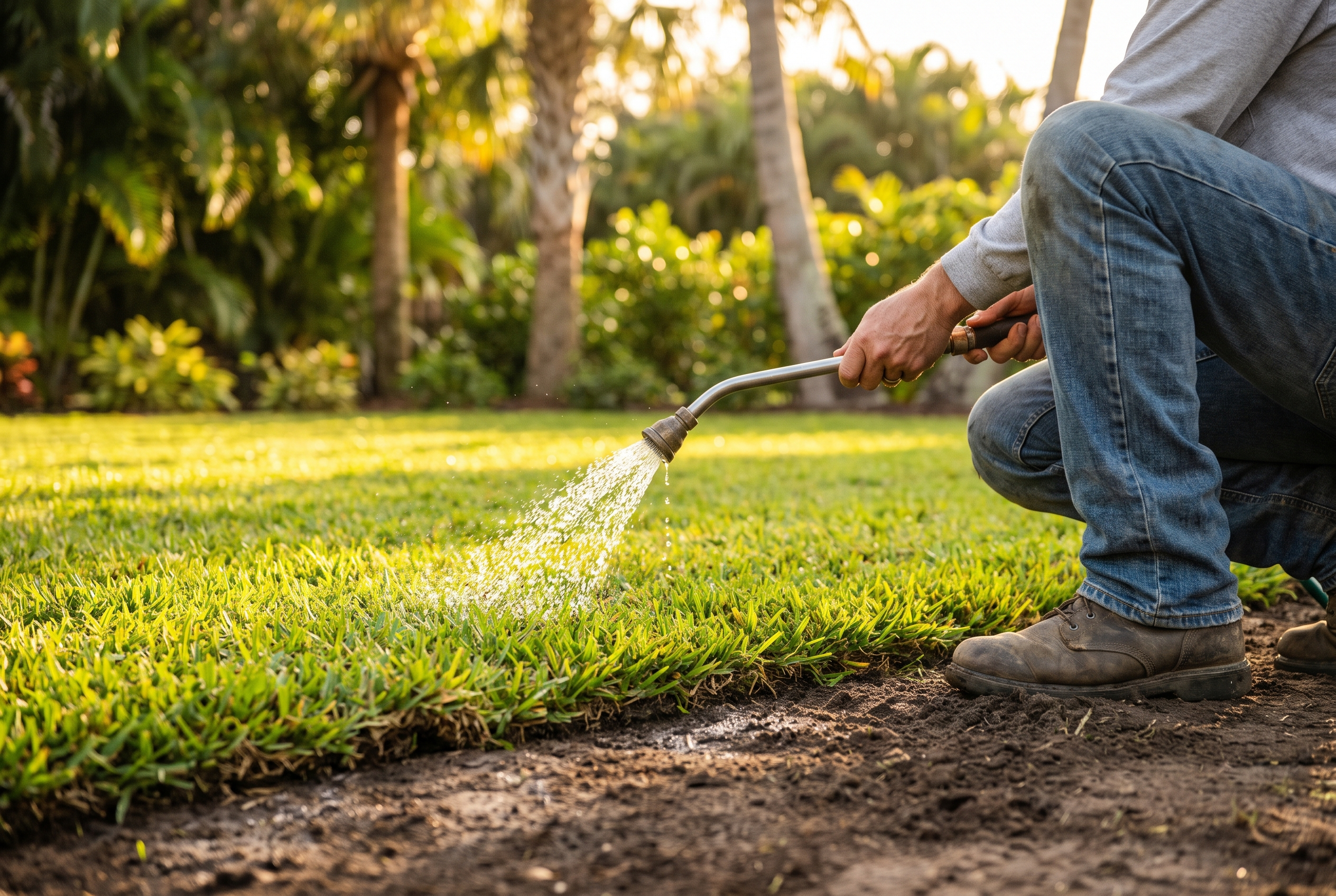
There is no honest sod warranty in Florida, and any installer who hands you one is mostly selling a feeling. The reason is simple. Sod is a living plant, not a manufactured product, and the day it is cut from the field its survival depends on water, soil, weather, and daily care that no crew controls once the truck pulls away. We install sand-bottom sod across Riverview and Valrico, and we would rather tell you that plainly than dress up a marketing line. What actually protects your money is not paper. It is preparation, fresh-cut sod, the right grass for your yard, and the first two weeks of watering.
The truth about a sod warranty in Florida
Grass is more like a patient recovering from surgery than a product in a box. One Tampa-area sod farm puts it directly: after harvest, sod turns far more vulnerable to disease and pests, so too many factors sit outside the company’s control to promise it will live (FreshSod, Sod & Groundcover Warranties). Some sellers say so plainly and offer no warranty, written or implied. Others advertise a guarantee, then price it into a higher bid or quietly decline the claim when it lands.
Why new sod fails, and why it is rarely the sod’s fault
Fresh sod arrives with almost no root system. It has to grow one into your soil before it can feed and water itself, and until it does, it is fragile. When a new lawn browns out, the cause is usually one of a handful of things that happen after harvest, not a defect baked into the grass:
- Watering gaps. New sod cannot reach moisture deep in the soil, so when the surface dries the grass shows stress almost immediately. Seams and edges dry first, which is why they brown first.
- Heat stress. In peak Tampa Bay summer, sod can wilt even with damp soil underneath, because the blade cannot transpire fast enough. Strips beside driveways and slabs cook under reflected heat and dry out ahead of the rest.
- Soil mismatch. Muck-grown sod set onto our sandy ground struggles to bridge two different soils, which slows rooting and drainage.
- Poor soil contact. Air pockets under a piece, or a lawn walked on before it knits, break the root-to-soil bond the grass needs.
- The wrong variety for the site. A sun-loving grass in deep shade, or a low-traffic grass on a dog run, was set up to thin out from day one.
None of these are warranty problems. They are establishment problems, and UF/IFAS is blunt that a sodded lawn’s frequent, careful watering during the first weeks is what carries it through (UF/IFAS ENH-03/LH013). A little tip-browning in week one is normal transplant shock and usually recovers.
The fine print that makes most guarantees hollow
Read a sod guarantee all the way to the bottom and you find the catch. A typical 30-day warranty holds only if you apply a starter fertilizer, an approved insecticide, and an approved fungicide, and follow the watering instructions exactly (FreshSod, Sod & Groundcover Warranties). Miss one of those in the chaos of a new lawn and the coverage evaporates.
Think about what that really asks. UF/IFAS actually advises not to fertilize new sod for the first 30 to 60 days, because the shallow roots cannot use it and the nutrients leach past them (UF/IFAS ENH-03/LH013). So a warranty that demands early fertilizer is asking you to work against the agronomy just to keep a claim alive. Meanwhile the guarantee gets funded somewhere, usually a padded bid, so you pay for coverage that a hot week or a busy weekend can void. We would rather put that money into the lawn.
What actually protects your new sod investment
The honest substitute for a warranty is doing the work right the first time, in the order that matters. Three things carry more weight than any certificate.
Preparation before a single piece goes down. Proper soil work before planting is critical to how fast turf roots and how much trouble it gives you later (UF/IFAS ENH-02/LH012). We strip the old lawn to bare dirt and hand-grade so water runs away from the house. Then we set the finish grade to the thickness of the sod itself. This is where a lawn is won or lost. We walk through the full sequence in our guide to what happens on install day.
Sod cut fresh the same day. Sod is perishable, and pallets baking in Florida heat can break down from the inside within a day of harvest. Cutting fresh right before we lay it removes that whole risk instead of managing it. You are rooting live grass, not reviving a stressed pallet that sat two days on a lot.
The right variety for your actual yard. Sun, shade, soil, and traffic decide which grass will thrive, and our project managers map that with you before you commit rather than after the lawn thins out. Our sod variety comparison lays out the trade-offs. Match the grass to the site and you remove the single failure a warranty could never fix anyway.
There is also the sod itself. We install sand-bottom sod because its porous base matches Central Florida’s sandy ground, so roots reach deeper, the lawn drains faster after a downpour, and disease pressure drops. A grass built to knit into your soil is worth more than a promise printed on a grass that was not.
Your two weeks matter more than any paper
Here is the part no certificate can do for you. The lawn lives or dies on the water it gets in the first two weeks, while it grows the roots it did not arrive with. UF/IFAS calls for short, frequent watering during that window, easing off only as the roots take hold (UF/IFAS ENH-03/LH013). Soak it the day it is laid. Keep the top few inches damp while it knits. Keep feet and mowers off it until it holds firm when you tug a corner.
Season does not change whether you should sod, only how you water afterward. Tampa Bay sits in USDA hardiness zones 9b to 10a (USDA Plant Hardiness Zone Map), and on NOAA’s 1991-2020 normals it averages about 312 frost-free days a year (Tampa frost dates, NOAA normals). Our warm-season grasses root in any month. They simply slow, without dying back, when the soil cools. A summer install leans on storm water, so watch for the overwatering that feeds fungus. A cool-month install roots slower and asks for patience. Once the grass is established, you shift to the deep, infrequent rhythm in our guide to watering established sod in Florida.
The bottom line for Tampa Bay homeowners
A warranty on living grass reads well and protects you little. It is loaded with conditions, funded by your own bid, and quietly waived at the first claim. What we put in its place is not a slogan. It is bare-dirt prep, sod cut the morning we lay it, the variety that fits your yard, and a clear watering plan your project manager walks you through before we leave. If you are planning a new lawn anywhere across Valrico, Riverview, Apollo Beach, or the wider Tampa Bay area, we are glad to walk your yard, match the right sod to the site, and show you exactly how we would protect the investment, no fine print required.

Fresh-cut sod installation, replacement, and delivery in the Tampa Bay area.
Continue reading
When to Fertilize New Sod in Florida: A Season-by-Season Guide for Tampa Bay
When to fertilize new sod in Florida: wait about 30 days, then feed by the season your sod went down. A Tampa Bay timeline that protects your new lawn.
How to Schedule Your Sod Installation Around Florida Water Restrictions Before the First Pallet Arrives
Planning a sod installation around Florida water restrictions: a step-by-step plan to pick a date, secure the new-sod exemption, and set irrigation first.
How to Check If New Sod Is Rooted in Florida: A Homeowner's Field Test
How to check if new sod is rooted in Florida with a simple tug test and edge-lift, plus the Tampa Bay timeline that tells you when to mow.