Best Sod for Tampa Bay: St. Augustine vs Zoysia vs Bermuda
The best sod variety for Tampa Bay depends on your yard's sun, traffic, and soil. Here's how St. Augustine, Bermuda, and Zoysia compare.
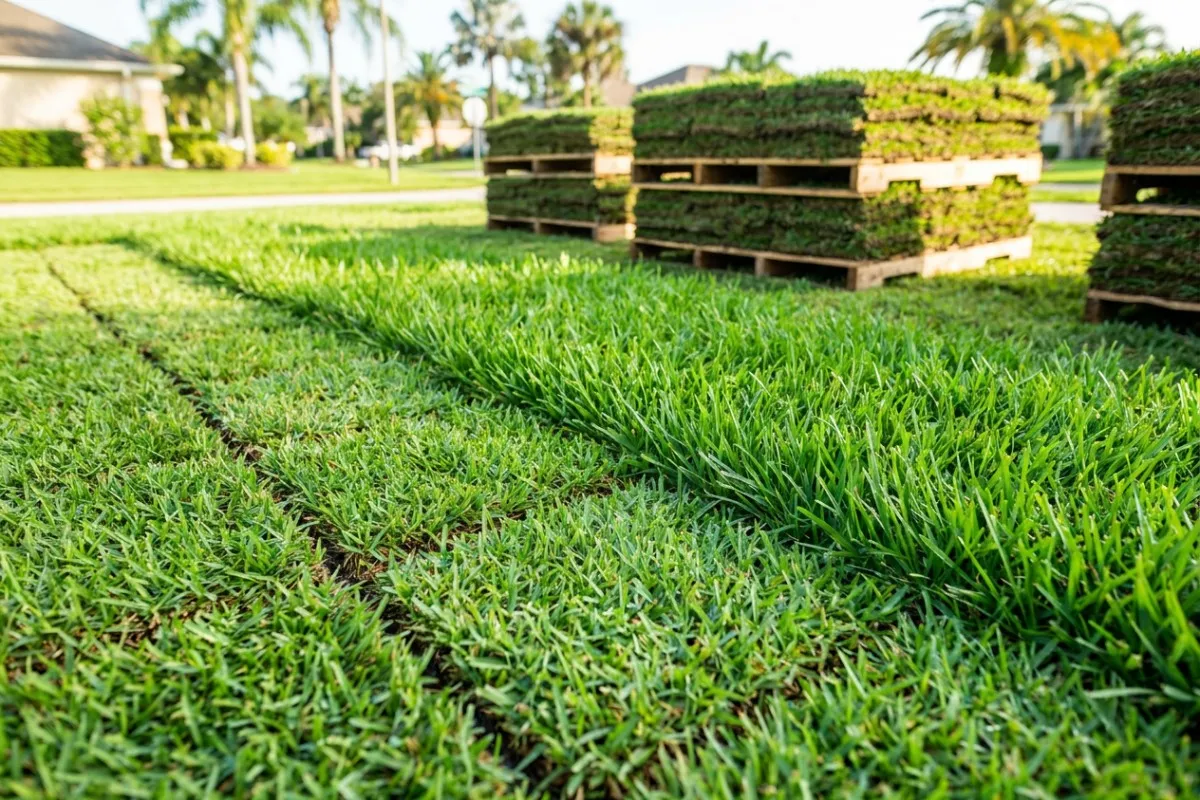
The best sod variety for Tampa Bay yards comes down to three things you can measure in your own yard: how much direct sun the area gets, how much foot traffic it takes, and what your soil is like. For most Hillsborough and Manatee County lots — shaded by live oaks, built on sandy soil, and walked on by kids and dogs — St. Augustine is the safest fit. But Zoysia and Bermuda each win in specific conditions, and picking wrong is an expensive mistake to unwind. This guide compares the three the way our project managers do on a site walk, so you know what fits before you call for a quote.
Tampa Bay sits in USDA Hardiness Zones 9b–10a, and all three of these are warm-season grasses that grow most actively from spring through fall (UF/IFAS). Because our winters stay mild, sod establishes here in nearly every month of the year — there is no single “right” season to install, only site conditions to match the grass to.
Start With Sunlight: The First Question That Decides Everything
Sun exposure eliminates more sod options faster than any other factor, so map it first. Watch the area you want to sod across a full day and note how many hours get unobstructed, direct sun.
- St. Augustine is the most shade-tolerant of the three. Standard cultivars hold up in partial shade, and shade-selected varieties like Palmetto and CitraBlue perform well under filtered tree canopy. Palmetto “does well in full sun or partial shade, but not in dense shade,” per UF/IFAS. Most residential lots in Riverview, Valrico, and Brandon have enough oak or palm cover that this matters.
- Zoysia prefers full sun but tolerates moderate shade — better than Bermuda, not as good as St. Augustine. Finer-textured cultivars like Zeon have noticeably better shade tolerance than coarser ones like Empire, according to UF/IFAS.
- Bermuda needs roughly 6 to 8 hours of direct sun and thins out quickly under any meaningful shade. UF/IFAS notes bermudagrasses have “poor cold and shade tolerance.” On a tree-heavy Tampa lot, Bermuda is usually the wrong call regardless of its other strengths.
If your yard has significant shade, the decision is largely made: lean St. Augustine, and reserve Bermuda for open, sun-drenched areas only. This is why we walk the property before recommending anything — a variety that thrives in your neighbor’s full-sun front yard can fail in your shaded backyard.
Palmetto vs. CitraBlue: Which St. Augustine for shade?
Both are shade-selected St. Augustine cultivars that suit Tampa Bay’s tree-canopied lots, but they are not interchangeable. Palmetto is the long-proven pick, prized for its soft, semi-dwarf blade and reliable performance in “full sun or partial shade, but not in dense shade” (UF/IFAS). CitraBlue is the newer UF-developed cultivar with a distinctive blue-green color, a denser, lower-growing habit that mows at 2–3 inches, and improved disease resistance. For deep-shade backyards Palmetto is the safer default; for a manicured look with fewer disease issues, CitraBlue is worth the ask.
Then Weigh Foot Traffic and How the Lawn Gets Used
How a lawn is used matters as much as how much sun it gets. A grass that looks perfect but shreds under a dog run or a backyard soccer game will disappoint you within a season.
Bermuda has excellent wear tolerance and recovers fast from damage, which is why it shows up on athletic fields and high-traffic areas. Zoysia forms a dense, cushiony turf with good traffic tolerance and recovers well from compaction — a strong middle option for active family yards that still get decent sun. St. Augustine handles occasional foot traffic but is more prone to thinning in heavily used paths and play zones, per UF/IFAS.
So the traffic ranking runs opposite the shade ranking: Bermuda and Zoysia take heavy use best, St. Augustine takes it least. When a yard has both heavy shade and heavy traffic — a common combination — there is a genuine trade-off, and that is exactly the conversation to have with a project manager rather than guessing off a chart.
Match the Grass to Central Florida’s Sandy Soil
Most Tampa Bay yards sit on sandy soil that drains fast and holds few nutrients. All three of these grasses are adapted to a range of Florida soils, so soil rarely rules a variety out — but it does shape how the sod performs once it is down.
The bigger soil question is not the grass type but what the sod itself was grown on. We install sand-bottom sod — grown on sandy soil rather than organic muck — because it integrates cleanly with Central Florida’s sandy ground instead of layering a dense organic mat on top of it. That layering can trap water at the seam and slow rooting. For a full breakdown of why the growing base matters, see our guide on sand-bottom versus muck-bottom sod. Whichever variety you choose, the base it was grown on affects how fast it roots into your yard.
Maintenance and Mowing: What You Are Signing Up For
Each grass asks for a different level of upkeep, and mowing height is the clearest signal of how demanding it will be.
St. Augustine maintenance
Standard cultivars mow at 3.5–4 inches; CitraBlue holds at 2–3 inches (UF/IFAS). A standard rotary mower is all you need. Moderate maintenance, best all-around fit for local conditions.
Zoysia maintenance
Fine-textured cultivars perform at 0.5–2 inches (UF/IFAS). Its slow growth means less frequent mowing, but keeping it at its best low height often calls for a reel mower.
Bermuda maintenance
Hybrid varieties mow at 0.5–1.5 inches and, per UF/IFAS, “generally require higher levels of maintenance than other Florida lawn grasses.” It is the most demanding of the three: more mowing, more inputs, and full sun are non-negotiable.
Bermuda does bring strong drought and salt tolerance, which can matter on open, coastal, or water-restricted sites. Zoysia’s deep roots also give it solid drought resilience. St. Augustine is thirstier and shows drought stress sooner, but for shaded inland lots that is rarely the deciding factor.
Choosing the Best Sod Variety for Your Tampa Bay Yard
There is no universally best grass — only the best grass for a specific yard. On a site walk, a project manager maps sun and shade across the property, asks how the lawn gets used, checks the soil and drainage, and factors in how much maintenance you want to take on. From there the recommendation is usually straightforward:
- Shaded, family-used yards: a shade-tolerant St. Augustine like Palmetto or CitraBlue.
- Open, high-traffic yards with good sun: Zoysia for a dense, durable lawn, or Bermuda where full sun and heavy wear dominate.
- Mixed conditions: often a St. Augustine base with the variety chosen for the shadiest zone, since that is where most lawns fail first.
This is the difference between installers who lay whatever arrives on the truck and a company that selects the turf for your site. If you are still weighing whether sod is the right move at all, our comparison of real sod versus artificial turf covers that ground, and our deeper look at why St. Augustine leads Tampa Bay lawns breaks down the cultivars within that family.
Whichever direction your yard points you, sod can go down in nearly any month here, and it is cut fresh right before installation. When you are ready, a project manager can walk your property, map the sun and traffic, and help you land on the variety that will actually thrive where you live.
Sources: UF/IFAS St. Augustinegrass for Florida Lawns, UF/IFAS Zoysiagrass for Florida Lawns, UF/IFAS Bermudagrass for Florida Lawns, UF/IFAS Turfgrass Selection for Florida Lawns.

Fresh-cut sod installation, replacement, and delivery in the Tampa Bay area.
Continue reading
St. Augustine vs Zoysia Sod in Tampa Bay: Which to Choose
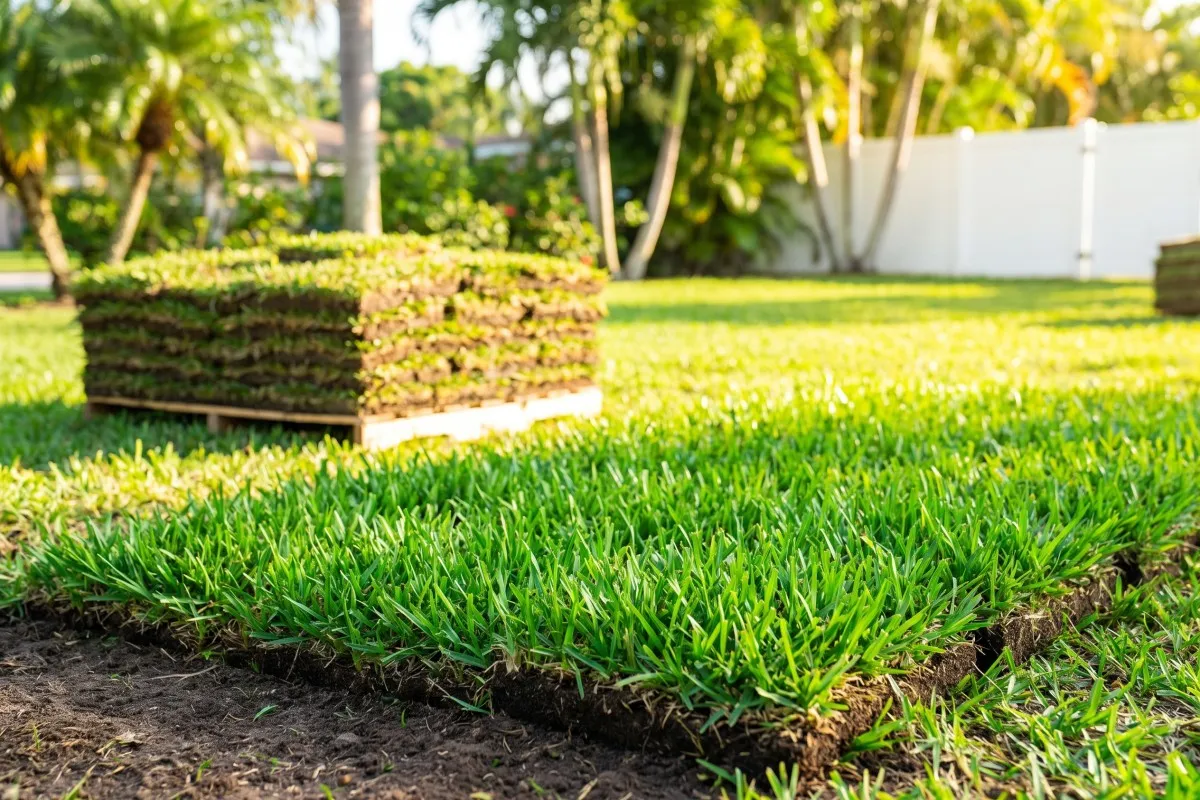
St. Augustine vs Zoysia sod in Tampa Bay comes down to sun and how hard the lawn gets used. Here's the step-by-step framework our crew uses to pick the right one.
Empire Zoysia Sod in Tampa Bay: The Low-Maintenance Grass With a Premium Look
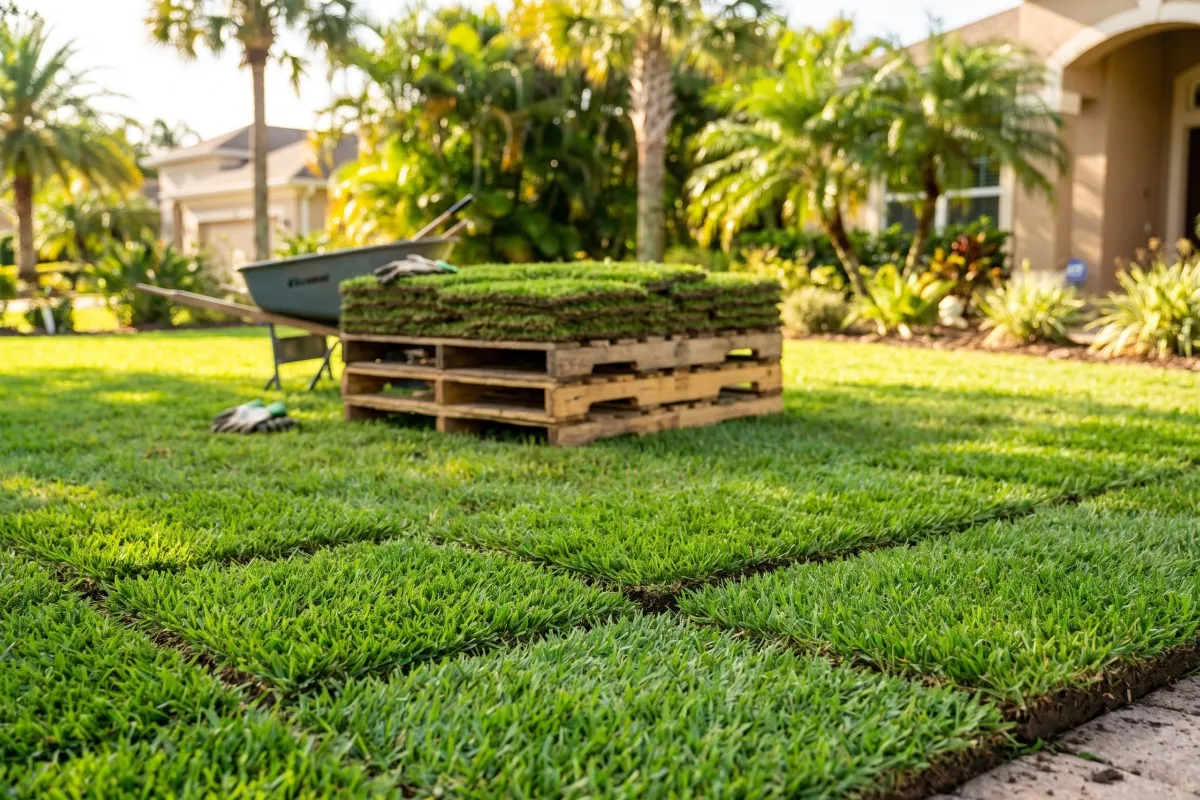
Empire Zoysia sod in Tampa Bay gives you a dense, high-end lawn with less mowing. How it compares to Floratam, and whether it fits your yard.
St. Augustine Grass Varieties in Tampa Bay: Floratam vs. ProVista vs. Bitter Blue vs. CitraBlue
Compare the St. Augustine grass varieties Tampa Bay lawns rely on: Floratam, ProVista, Bitter Blue and CitraBlue, and how to pick the right one.