Real Sod vs. Artificial Turf in Florida: Why Natural Sod Wins
Artificial turf is marketed as low-maintenance and always green — but for most Tampa Bay homeowners, natural sod is the better investment. Here's an honest comparison.
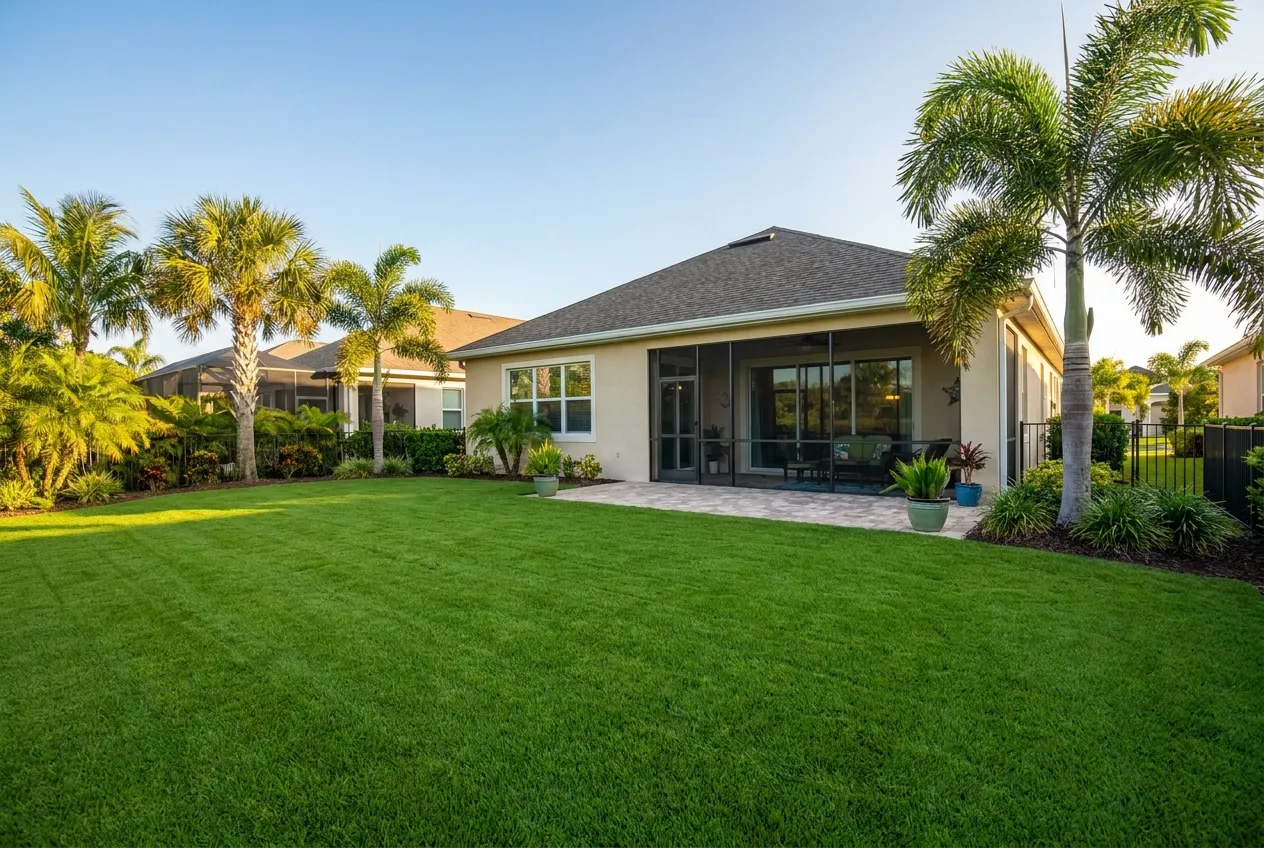
Florida homeowners comparing lawn options often land on the same question: real sod or artificial turf? Synthetic grass is marketed as maintenance-free, long-lasting, and perpetually green. But for most Tampa Bay yards, natural sod is the smarter investment — and the choice that holds up over time. Here’s a straight comparison.
Heat: a Florida-specific problem
Artificial turf absorbs and holds heat. On a typical Florida summer day, a synthetic lawn’s surface can exceed 150°F — hot enough to burn bare feet and make the yard unusable for kids and pets during peak hours. Natural grass stays cooler by releasing moisture and providing its own shade through the canopy, helping to reduce surface and ambient temperatures in your yard.
In a state where summer runs from May through October, that difference is felt every day.
Drainage during rainy season
Florida’s rainy season brings intense, fast-moving downpours. Natural sod — especially locally grown, sand-bottom varieties — drains water naturally through its root zone and into the soil below. Artificial turf relies on perforations in its backing to drain, which works adequately at first but can accumulate organic debris, bacteria, and pet waste in ways that are difficult to fully rinse out over time.
Long-term cost
Professional artificial turf installation runs $12–20 per square foot or more for quality product. It carries a lifespan of 10–15 years before it needs to be replaced — at roughly the same cost again. A natural lawn, properly installed with the right grass variety for your yard’s sun and soil, costs significantly less up front and grows stronger over time with appropriate watering.
What artificial turf does well
To be fair: synthetic turf has real advantages in specific situations. It performs in spaces with almost no sunlight where grass simply won’t grow. It handles high-traffic commercial applications where natural grass can’t recover fast enough. And in areas with severe water restrictions year-round, it eliminates irrigation needs entirely.
For most residential Tampa Bay yards — with reasonable sun exposure and Florida’s natural rainfall — those tradeoffs don’t add up.
Why some real lawns fail (and what to do instead)
Most homeowners who look at artificial turf do so after a bad experience with real grass — a lawn that looked great for a season then turned patchy, weed-choked, or brown. In nearly every case, that comes down to one of two things: the wrong grass variety for the yard’s conditions, or a poor installation (bad soil prep, shallow grading, or sod that wasn’t fresh when it went down).
A Floratam St. Augustine laid on properly graded soil in a sunny Tampa yard, sourced fresh from a local grower, doesn’t struggle. It knits in quickly, fills in cleanly, and stays lush season after season. The same is true for Zoysia in shadier spots, or Bahia for larger open areas that need low-input toughness.
Matching the grass to the yard is most of the work. When that’s done right — and the sod goes down fresh — a natural lawn outperforms synthetic alternatives on every dimension that matters in Florida’s climate.
If you’re weighing your options, get a free quote and we’ll recommend the variety that will actually thrive in your specific yard.

Fresh-cut sod installation, replacement, and delivery in the Tampa Bay area.
Continue reading
When to Fertilize New Sod in Florida: A Season-by-Season Guide for Tampa Bay
When to fertilize new sod in Florida: wait about 30 days, then feed by the season your sod went down. A Tampa Bay timeline that protects your new lawn.
Salt-Tolerant Sod for Tampa Bay: Coastal Grass Options for Apollo Beach, Ruskin and Sun City Center
A ranked guide to salt tolerant sod for Tampa Bay: which coastal grasses hold up to salt air in Apollo Beach, Ruskin and Sun City Center.
How to Schedule Your Sod Installation Around Florida Water Restrictions Before the First Pallet Arrives
Planning a sod installation around Florida water restrictions: a step-by-step plan to pick a date, secure the new-sod exemption, and set irrigation first.