Commercial Sod Supplier in Tampa Bay: A Buyer's Guide
Choosing a commercial sod supplier in Tampa Bay: volume logistics, pallet yield math, species specs for high-traffic turf, and realistic warranty terms.
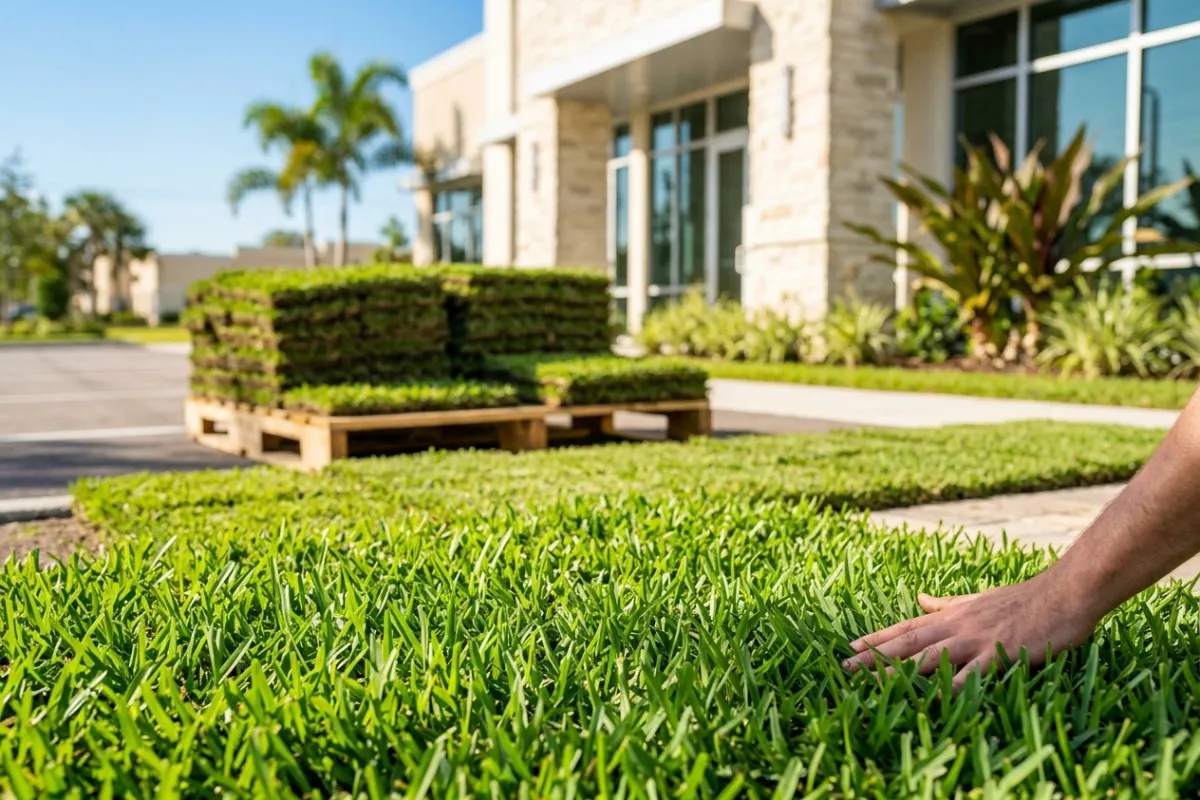
A good commercial sod supplier in Tampa Bay should give you three things that homeowner-focused sod content never covers: reliable volume logistics from a single pallet to a full truckload, species specifications matched to how the turf will actually be used, and a clear, honest account of what happens to the sod after it leaves the farm. If you manage multiple communities or run a landscape crew, those operational details decide whether a renovation lands on schedule and holds up. This guide walks through the questions a senior account rep would expect you to ask before you order.
InstantGreen Sod is a family-owned grower-direct supplier based in the Riverview and Wimauma area, serving Valrico, Brandon, Lithia, Tampa, Apollo Beach, Ruskin, Sun City Center, Parrish and the surrounding communities across Hillsborough, Manatee, and parts of Pinellas County. Tampa Bay sits in USDA Hardiness Zones 9b to 10a, which means warm-season turf establishes across a long window and there is no month of the year when commercial sod cannot go in.
What certified sod versus field-run actually means
The first specification that separates a professional order from a homeowner order is whether you are buying certified sod or field-run sod. Certified turfgrass moves through a limited-generation production system where foundation stock produces registered sod and registered stock produces the certified sod sold to you. Fields are inspected annually by state-authorized inspectors to confirm the grass is true-to-type and free of noxious or objectionable weeds, according to Oklahoma State University’s turfgrass certification program.
Field-run sod carries no such assurance of varietal purity or weed status. That matters more on a commercial install than a backyard, because a contaminated field-run pallet can seed a weed problem across an entire community’s common areas, and remediation is far more expensive than the roughly 10 percent premium certified turfgrass typically commands over non-certified, as NG Turf notes. When you request a quote, ask which cultivar you are getting by name, not just “St. Augustine,” and whether it is grown to certification standards.
A second sourcing question is the soil the sod was grown on. Central Florida yards are predominantly sandy, and sand-bottom sod grown on sandy soil integrates with that native profile instead of layering a dense organic mat on top of it. For a commercial site where drainage and root establishment determine how the turf survives the rainy season, that difference is operational, not cosmetic. Our breakdown of sand-bottom versus muck-bottom sod explains why it changes how fast a new install takes hold.
Calculating pallet yield for large installs
Pallet yield is where large orders go wrong. There is no universal sod-piece standard, so you cannot assume a pallet number without confirming coverage. In the southern U.S., warm-season slabs are commonly cut at 16 by 24 inches, roughly 2.7 square feet per piece, and a pallet typically holds about 150 to 180 pieces covering 400 to 500 square feet, per Sod Solutions and The Grass Outlet. Always ask your supplier for the exact coverage figure they cut to before you multiply.
Work the math conservatively. For a 40,000 square foot common-area renovation planned at 400 square feet of usable coverage per pallet, you need 100 pallets before waste. Then add for the realities of the site:
- Cutting waste of 5 to 10 percent for curved bed lines, tree rings, sidewalks, and odd corners
- Grade and irregularity on sloped or uneven ground, which increases trim loss
- Staging buffer so a crew is never stopped waiting on the last two pallets
That pushes a nominal 100-pallet job to roughly 105 to 110 pallets ordered. Under-ordering by a few pallets on a large install is worse than a small overage, because a second delivery of fresh-cut sod means another truck, another day, and turf cut at a different time from the rest of the field.
Species selection: wear tolerance versus shade
Commercial sites rarely have one condition. An entrance median in full sun and a shaded courtyard between buildings are different turf problems, and the correct answer is often more than one species across the property. The core trade-off is wear tolerance versus shade tolerance, and no single warm-season grass wins both.
- Bermuda (for example Tifway 419) has superior wear tolerance and quick recovery from damage, which suits high-traffic amenity areas, but it needs full sun and thins badly under any canopy, Sod Solutions reports.
- Zoysia offers moderate to good wear tolerance with better shade tolerance than Bermuda, a reasonable middle option for mixed-use grounds.
- St. Augustine is the most widely used lawn grass in Florida per UF/IFAS, with strong shade tolerance and only fair wear tolerance, best for shaded common areas and lower-traffic frontage rather than walked-through zones.
For a typical Tampa Bay community that means specifying by zone: a wear-hardy grass for dog areas and shortcuts, and a shade-tolerant St. Augustine cultivar under the oaks. Our guide to why St. Augustine leads Tampa Bay lawns and how the cultivars differ covers the variety-level choices, including chinch-bug resistance and reduced-mowing options that matter over a large maintained acreage.
Delivery logistics from a commercial sod supplier in Tampa Bay
Sod is heavy, perishable freight, and commercial delivery has to be planned around both facts. A warm-season pallet weighs roughly 1,500 to 3,000 pounds, and a soaked pallet after rain can approach 4,000 pounds, according to CT Sod. That weight drives every access decision on site.
Before a truck rolls, confirm the practical details a property manager controls:
- Access and drop points a flatbed and forklift can reach without damaging curbs, irrigation heads, or parking surfaces
- Staging near the work so crews are not hand-carrying pallets across a property
- Timing to installation, because sod is a living product cut fresh and should go down promptly, ideally within about 24 hours of delivery, as sod suppliers consistently advise
InstantGreen delivers grower-direct across the Tampa Bay service area, from single pallets for spot repairs to full truckloads for a phased community renovation, with sod cut fresh right before installation rather than sitting in a yard. For crews that self-install, coordinating the delivery window to the day the beds are prepped and graded is the single biggest lever on turf survival.
Warranty terms and what they really cover
This is where property managers should set expectations internally before a claim ever comes up. Across the industry, most suppliers limit what they warrant once the sod leaves the farm, because watering, grading, drainage, mowing, pest treatment, and weather after the truck leaves are outside any grower’s control. The horticultural reason is well documented: because fresh-cut sod arrives without a developed root system, whether it establishes depends on correct post-installation watering and care during the first few weeks, and inconsistent watering is a leading cause of failure, per UF/IFAS’s Establishing Your Florida Lawn. Some suppliers offer a narrow grow-in window that is conditional on installation within 24 hours of delivery, but those terms are limited and hinge entirely on correct handling.
What that means in practice: the value a supplier is accountable for is the sod itself, that it is the correct certified cultivar, cut fresh, and delivered in good condition. Survival is bought through preparation and aftercare. On a commercial job the controllable failure points are almost always the same ones, so build them into the contract and the maintenance scope:
Water on schedule from day one, keep new sod moist but not waterlogged, and schedule fungus and pest treatment early, especially during the hot, wet summer months when brown-patch pressure is highest. Our post on protecting new turf through the Florida rainy season covers the moisture-management steps that decide whether a shaded install holds. Rather than leaning on a warranty that industry practice does not really extend past delivery, specify the things that are enforceable: named cultivar, certification, freshness, delivery window, and a documented aftercare plan for the responsible crew.
Ordering with fewer surprises
The through-line for every item above is specification. A commercial order that names the cultivar, confirms certification and soil base, states exact pallet coverage, maps species to site zones, plans truck access, and assigns aftercare responsibility is an order that lands on schedule and looks right a year later. That is the level of detail a serious supplier expects, and the level a property manager should insist on.
If you are scoping a multi-community renovation or a recurring wholesale relationship for your crews, reach out for a quote and we can walk the specs, quantities, and delivery timing for your specific sites.
Continue reading
Fresh-Cut vs. Pre-Cut Sod: Why Harvest Timing Makes or Breaks a Florida Lawn
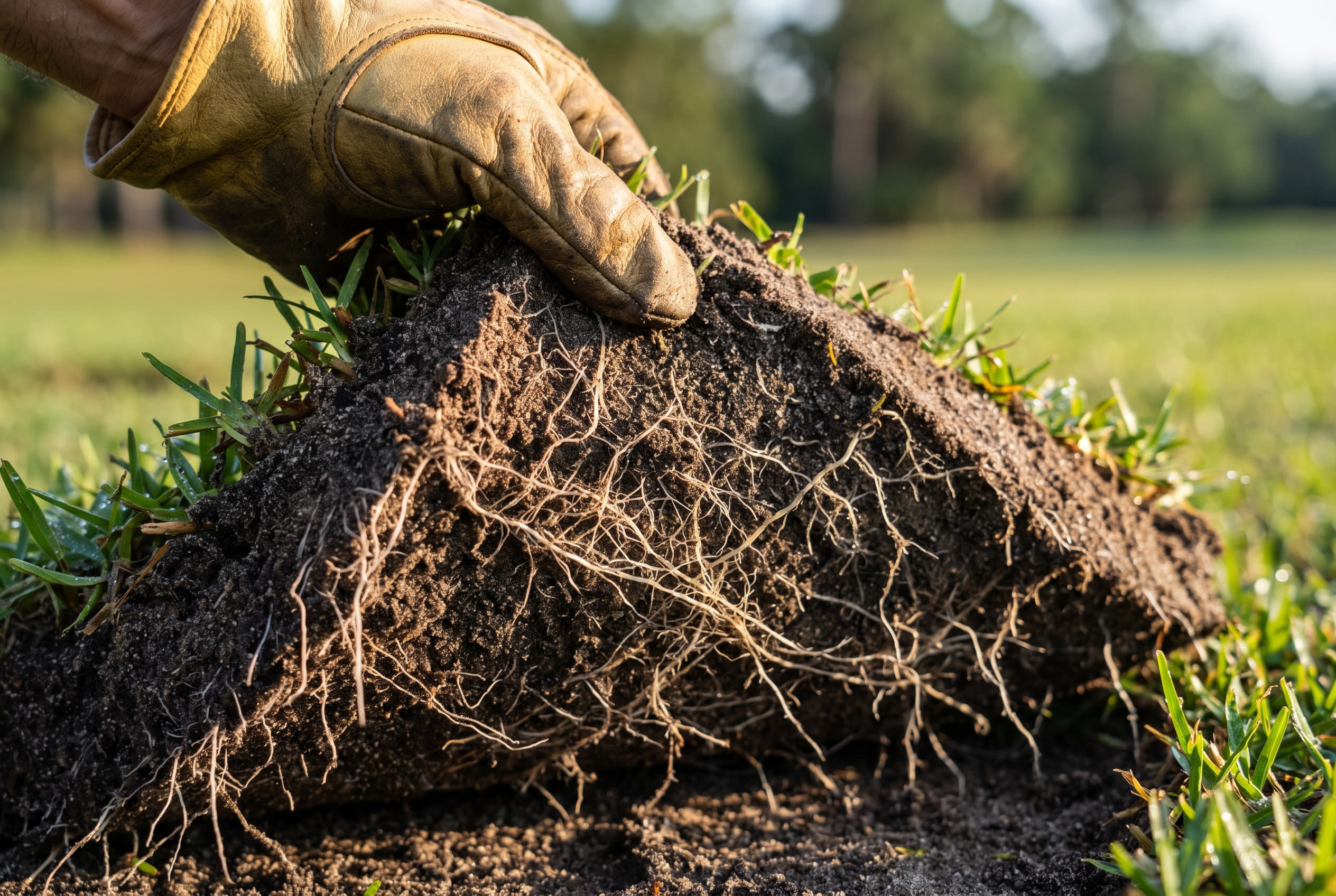
Fresh cut sod in Florida beats a pallet that sat overnight. Here is why harvest timing decides whether your Tampa Bay lawn roots or browns.
St. Augustine Grass Varieties in Tampa Bay: Floratam vs. ProVista vs. Bitter Blue vs. CitraBlue
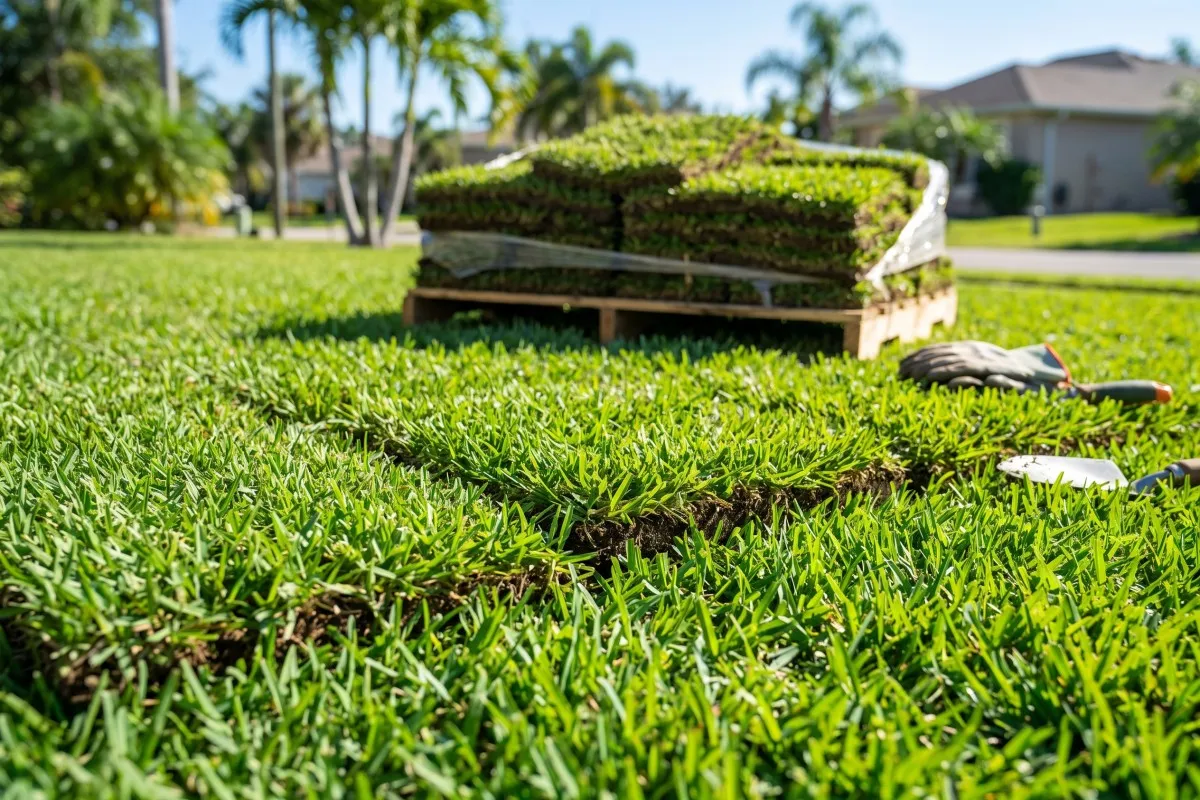
Compare the St. Augustine grass varieties Tampa Bay lawns rely on: Floratam, ProVista, Bitter Blue and CitraBlue, and how to pick the right one.
The Best Time to Install Sod in Florida? Why Tampa Bay Is a Year-Round Window
The best time to install sod in Florida isn't a single season. Here's how Tampa Bay's climate opens a year-round window, season by season.