
Florida Lawn Weed Identification: Tampa Bay Visual Guide
A UF/IFAS visual ID guide to common lawn weeds Florida homeowners encounter in Tampa Bay, with a month-by-month prodiamine pre-emergent calendar.
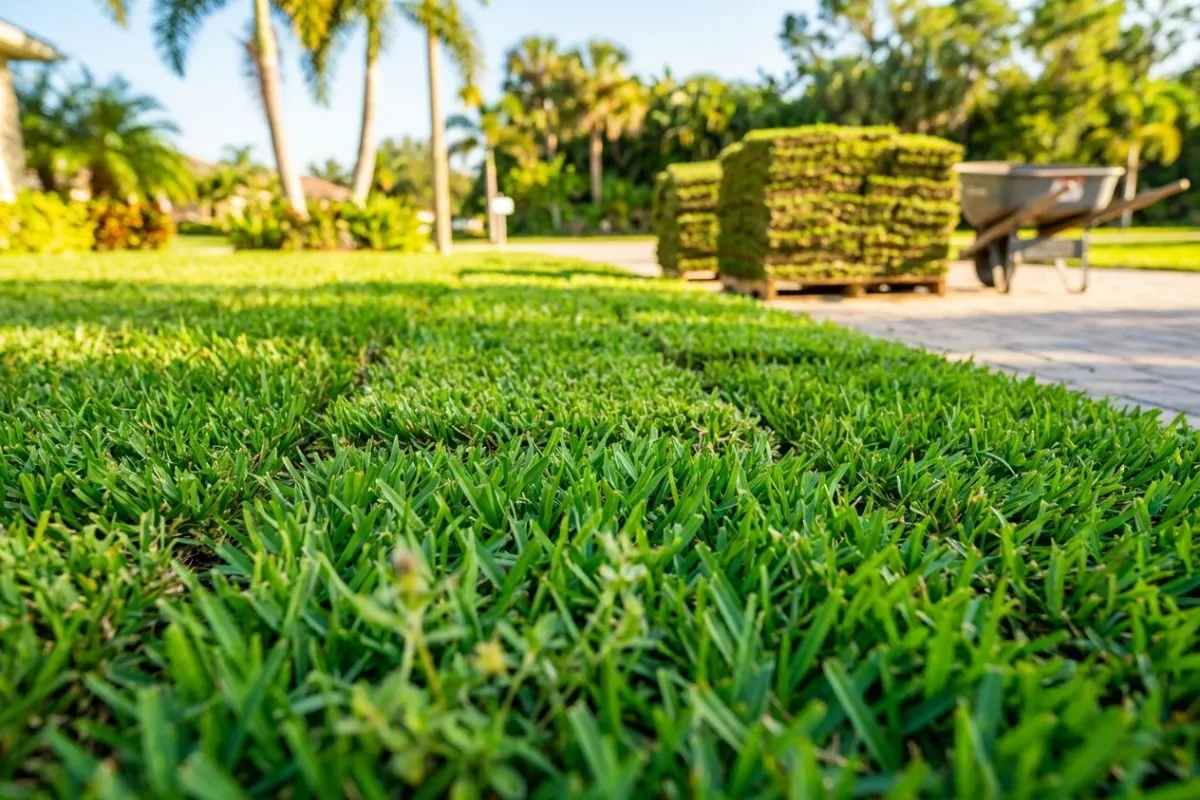
Florida’s year-round growing season means common lawn weeds Florida identification is not a one-month task — it is a skill Tampa Bay homeowners use twelve months a year. Unlike the mid-Atlantic or the Midwest, where a hard freeze kills most weed seeds and resets the battlefield each winter, Hillsborough and Manatee County soil temperatures rarely stay cold long enough to provide that biological reset. Instead, the weed calendar splits into two pressure waves: a hot-season surge of grassy weeds and sedges that begins as early as February, and a cool-season flush of broadleaf annuals that moves in when the summer rains stop in October. Treating those two waves with the same product at the same time is the most common mistake Tampa Bay homeowners make.
This guide identifies nine weeds causing the most damage across local St. Augustine lawns, explains how to tell them apart quickly in the field, and provides a month-by-month pre-emergent calendar calibrated to Tampa Bay soil temperatures — not the generic national schedules printed on most herbicide bags.
Know the Weed Family Before You Buy Any Herbicide
UF/IFAS Extension organizes Florida lawn weeds into three botanical families. The herbicide chemistry that controls one family often has no effect on another, so confirming the family before purchasing any product saves both time and money.
- Grasses (Poaceae): One seed leaf at emergence; long, narrow blades; round or slightly flattened stems with distinct nodes you can feel by running a finger along the stem. Controlled by pre-emergent herbicides before germination, or by selective graminicides on non-St. Augustine turf.
- Sedges (Cyperaceae): Triangular stem cross-section — roll the stem between thumb and forefinger and it will not roll smoothly, a reliable field test. No nodes. Most standard pre-emergents provide little to no sedge suppression; sedge-specific active ingredients are required.
- Broadleaf weeds (dicots): Two seed leaves at emergence; wider blades with branching, net-like veins. Controlled by selective broadleaf herbicides, typically those containing metsulfuron, atrazine (St. Augustine only), or carfentrazone.
Common Florida Lawn Weeds: Tampa Bay Visual Identification Guide
1. Southern Crabgrass (Digitaria ciliaris) — Summer Annual Grass

What to look for: Flat, wide leaf blades approximately 2 inches long, with visible hairs along the blade margins and sheath. As the plant matures it produces a radial seed head of three to eight “fingers” splaying outward from a central stem — distinctive once you’ve seen it. Young plants form low, spreading clumps; mature plants root at nodes along creeping stems (stolons).
Tampa Bay timeline: Germinates when soil at a 2-inch depth reaches 55–60°F, typically February through March in the Tampa Bay area. Peak visual pressure runs March through July.
Why it spreads fast: A single plant can produce up to 150,000 seeds — a figure confirmed across multiple university extension programs, including UMass Amherst and Clemson HGIC. Hand-pulling after seed set disperses seed to new ground. Pre-emergent application before germination is the practical control point.
2. Goosegrass (Eleusine indica) — Summer Annual Grass

What to look for: A whitish, flattened stem base that fans outward in a star or rosette at ground level. Leaf blades are folded lengthwise at the stem rather than rolled, and the seed head resembles a closed zipper — two rows of seeds pressed flat against a central spike. The base of the plant often stays white-gray even in a green lawn.
Tampa Bay timeline: Germinates slightly later than crabgrass (March through May) and tolerates compacted soil and intense heat better than most summer annuals. The primary entry points are thin turf, driveway edges, and high-foot-traffic areas.
Control note: UF/IFAS EDIS publication AG483 — Identification, Biology, and Management of Goosegrass in Florida Turfgrasses — documents that goosegrass is less responsive to some pre-emergents at standard homeowner rates than crabgrass is, and that confirmed herbicide-resistant populations exist in Florida, making dense, healthy turf canopy the most reliable suppression tool.
3. Yellow Nutsedge (Cyperus esculentus) — Perennial Sedge

What to look for: Light green, glossy, upright leaves arranged in groups of three from the base. The stem is clearly triangular when rolled. Seed heads are yellow to golden-brown at maturity. Underground, the plant produces small round nutlets on rhizomes — the feature that makes control so difficult.
Why it persists: Those nutlets remain viable in Florida soil for years. Pulling the above-ground plant typically leaves the nutlets intact and may stimulate dormant ones to sprout. According to UF/IFAS EDIS publication ENH884, effective nutsedge management requires repeated applications of sedge-specific herbicides — a single treatment rarely provides season-long control.
4. Purple Nutsedge (Cyperus rotundus) — Perennial Sedge

What to look for: Darker green than yellow nutsedge; seed head is purple-brown to reddish-maroon. The key structural difference from yellow nutsedge is underground: purple nutsedge forms chains of nutlets connected by rhizomes, while yellow nutsedge produces individual nutlets. In the field this distinction is less important than confirming the triangular stem common to both.
Control note: Purple nutsedge is considered the more aggressive species in Central Florida. UF/IFAS EDIS EP569 (Biology and Management of Yellow and Purple Nutsedge) identifies halosulfuron-methyl (sold as Sedgehammer) and bentazon as the recommended selective post-emergent options for St. Augustine lawns. Standard prodiamine and pendimethalin pre-emergents provide no suppression of either nutsedge species, per the UF/IFAS Weed Management Guide for Florida Lawns (EDIS EP141) — sedge-specific active ingredients are required regardless of pre-emergent application timing.
5. Dollarweed / Pennywort (Hydrocotyle umbellata) — Perennial Broadleaf

What to look for: Bright green, round leaves the size of a half-dollar coin with the stem attached at the center of the leaf — a waxy, lily-pad appearance. Spreads by rhizomes and by stems that root at nodes. Concentrations form in low, wet areas of the lawn.
What it signals: Dollarweed is a reliable indicator of excess moisture — chronic over-irrigation, poor drainage, or a grade that ponds water after rain. Reducing irrigation frequency before applying any herbicide addresses the underlying cause; otherwise the weed returns within one growing season. Post-emergent control with metsulfuron-methyl or atrazine is effective on established dollarweed plants in St. Augustine lawns, per UF/IFAS EDIS EP141; note that atrazine applications on Floratam should not exceed label rates when temperatures are above 85°F.
6. Florida Pusley (Richardia scabra) — Summer Annual Broadleaf

What to look for: Prostrate mat-forming plant with opposite, oval leaves that have a distinctly rough, sandpaper-like texture. Stems are hairy. Small white star-shaped flowers cluster at branch tips and are often the first visible sign. The plant blends into the turf canopy until it flowers or until a section of lawn is thin enough for the mat to be visible from above.
Tampa Bay timeline: Late spring through late summer, peaking in July and August during the hottest, most humid weeks.
7. Lawn Spurge (Chamaesyce hirta / C. prostrata) — Summer Annual Broadleaf

What to look for: Tiny oval leaves with a reddish midrib arranged oppositely on prostrate, branching stems that radiate outward from a single taproot. The stems stay very close to the soil surface. The field diagnostic: break any stem and it exudes white milky sap immediately — a consistent identifier across all spurge species.
Where it appears: Bare, thin, or compacted turf. Spurge enters through gaps in the canopy, so it often signals a separate problem — drought stress, mowing scalp damage, or soil compaction — rather than herbicide failure.
8. Chamberbitter (Phyllanthus urinaria) — Summer Annual Broadleaf

What to look for: Frequently mistaken for a mimosa seedling. Small alternate leaflets arranged in two parallel rows along horizontal stems give the plant a distinctly feathery, fern-like appearance. Height rarely exceeds 12 inches. The diagnostic feature: tiny bead-like seed capsules attached to the underside of branches at each leaflet base, visible without magnification.
Tampa Bay timeline: Summer through early fall. Common along the edges of mulched beds adjacent to turf and in any soil disturbed during recent renovation work.
9. Virginia Buttonweed (Diodia virginiana) — Perennial Broadleaf

What to look for: A low-growing, mat-forming perennial with hairy, much-branched stems running at or just above the soil surface. Leaves are narrow to lance-shaped, opposite, and clasp the stem. Tiny white four-petaled flowers appear at the leaf axils — the junction where leaf meets stem. Unlike summer annual broadleafs, Virginia buttonweed regrows from root crowns and stem fragments left after pulling, making hand removal unreliable on established mats.
Why it persists: UF/IFAS EDIS EP386 (Virginia Buttonweed Biology and Management in Turf) identifies this species as one of the most difficult-to-control broadleaf weeds in warm-season Florida lawns. It tolerates both wet soils and partial shade — two conditions common in irrigated St. Augustine turf — and a systemic viral pathogen (Diodia vein chlorosis virus) sometimes causes leaf discoloration that makes infested patches easier to spot but does not weaken the plant enough to aid control.
Tampa Bay prevalence: UF/IFAS Extension lists Virginia buttonweed among the most prevalent warm-season broadleaf weeds in Hillsborough and Manatee Counties. Pressure peaks from late spring through summer in persistently moist areas: irrigated turf edges, low spots, and zones under tree canopy where the St. Augustine canopy is thinner.
Control note: Metsulfuron-methyl applied post-emergent provides effective control of small plants; multiple applications spaced several weeks apart are typically required to suppress established mats, per UF/IFAS EDIS EP386. Atrazine is also labeled for Virginia buttonweed on St. Augustine; reduce irrigation for 24 hours before and after application to maximize uptake.
Pre-Emergent vs. Post-Emergent: The Control Decision Tree
Two herbicide categories cover the weed lifecycle, and applying the wrong one at the wrong time provides no benefit and may injure the lawn.
Pre-emergent herbicides form a chemical barrier in the soil surface that kills germinating seeds before the seedling emerges. They have no effect on established weeds and no effect on perennial sedges that spread by rhizome and nutlet rather than seed. Timing to soil temperature is the entire game.
Post-emergent herbicides are applied to actively growing plants. Selective post-emergents target specific weed families without injuring surrounding turfgrass — but selectivity depends on the active ingredient and the grass species. Several post-emergents commonly used on bermudagrass or zoysia will injure or kill St. Augustine (Stenotaphrum secundatum var. Floratam) at label rates.
Weed Control St. Augustine Lawn Tampa: Month-by-Month Pre-Emergent Calendar
The safest pre-emergent active ingredients for St. Augustine are prodiamine and pendimethalin — both documented as safe for Floratam at label rates in UF/IFAS EDIS EP141, the Weed Management Guide for Florida Lawns. Prodiamine at standard granular rates provides approximately 4–6 months of residual control. The application window is set by soil temperature, not the calendar date — which can shift two to three weeks from year to year depending on winter severity.
Use a soil probe thermometer to measure at a 2-inch depth. The numbers below are based on UF/IFAS extension guidance and regional soil temperature averages for the Tampa Bay area.
| Month | Action |
|---|---|
| January | Monitor 2-inch soil temperature. Do not apply spring pre-emergent until the threshold is reached; applying early wastes the residual window before crabgrass germinates. |
| February | Spring pre-emergent window opens. Soil at 2 inches typically crosses 55°F in early-to-mid February in the Tampa Bay area. Apply prodiamine or pendimethalin immediately; activate with 0.5–1 inch of irrigation or rain. The window closes when soil reaches 70°F — missing it means managing crabgrass post-emergent, which is significantly harder. |
| March | If using a split-rate granular strategy, apply the second half of the annual prodiamine dose. Continued cool fronts can extend the germination window into mid-March some years. |
| April–August | Pre-emergent window is closed for summer annuals. Shift to selective post-emergents for escaped grassy weeds in non-St. Augustine areas. Begin sedge management: apply halosulfuron-methyl or bentazon to actively growing nutsedge; repeat per label interval (typically 6–8 weeks). Spot-treat broadleaf weeds with atrazine or metsulfuron as needed. |
| September | Fall pre-emergent window. Apply a second prodiamine application before soil temperatures drop to 70°F — this blocks winter annual broadleaf weeds including common chickweed (Stellaria media) and henbit (Lamium amplexicaule). In the Tampa Bay area, September is typically the application month. |
| October–November | Monitor for winter broadleaf emergence. Apply selective post-emergent broadleaf treatments as needed, but reduce rates as St. Augustine growth slows and herbicide metabolism in the plant decelerates. |
| December–January | St. Augustine enters semi-dormancy. Minimize all herbicide applications; injury risk at normal-season rates increases when the grass cannot metabolize and recover normally. |
Thick Turf Is Still the Primary Defense
No herbicide calendar substitutes for a dense canopy. St. Augustine growing on well-drained, sandy soil — the soil profile that matches Tampa Bay’s native conditions — maintains the root depth and lateral growth rate to shade out germinating weed seeds between spray intervals. Weeds concentrated in specific zones, particularly dollarweed, goosegrass, and spurge, usually point to a turf health problem underneath: chronic over-irrigation, compaction, shade stress, or scalp damage from mowing too low. Correcting the underlying condition reduces weed pressure and herbicide costs simultaneously.
The connection between soil type and root-zone health is one reason sand-bottom sod establishes faster and maintains thicker canopy coverage than muck-grown alternatives in Central Florida’s sandy soils.
Weed pressure that peaks in July and August frequently coincides with fungal disease activity — the same heat, humidity, and moisture conditions that favor summer annual broadleafs also create the pathogen window for gray leaf spot and large patch. The Tampa Bay lawn fungal disease guide covers the three pathogens most active during the same months when post-emergent weed treatments are at their peak.

Fresh-cut sod installation, replacement, and delivery in the Tampa Bay area.
Continue reading
Pre-Emergent Weed Control for Florida Lawns (Tampa Bay Timing)
Pre-emergent weed control on a Florida lawn works only when it is timed to soil temperature. Here is the Tampa Bay window for crabgrass and winter weeds.
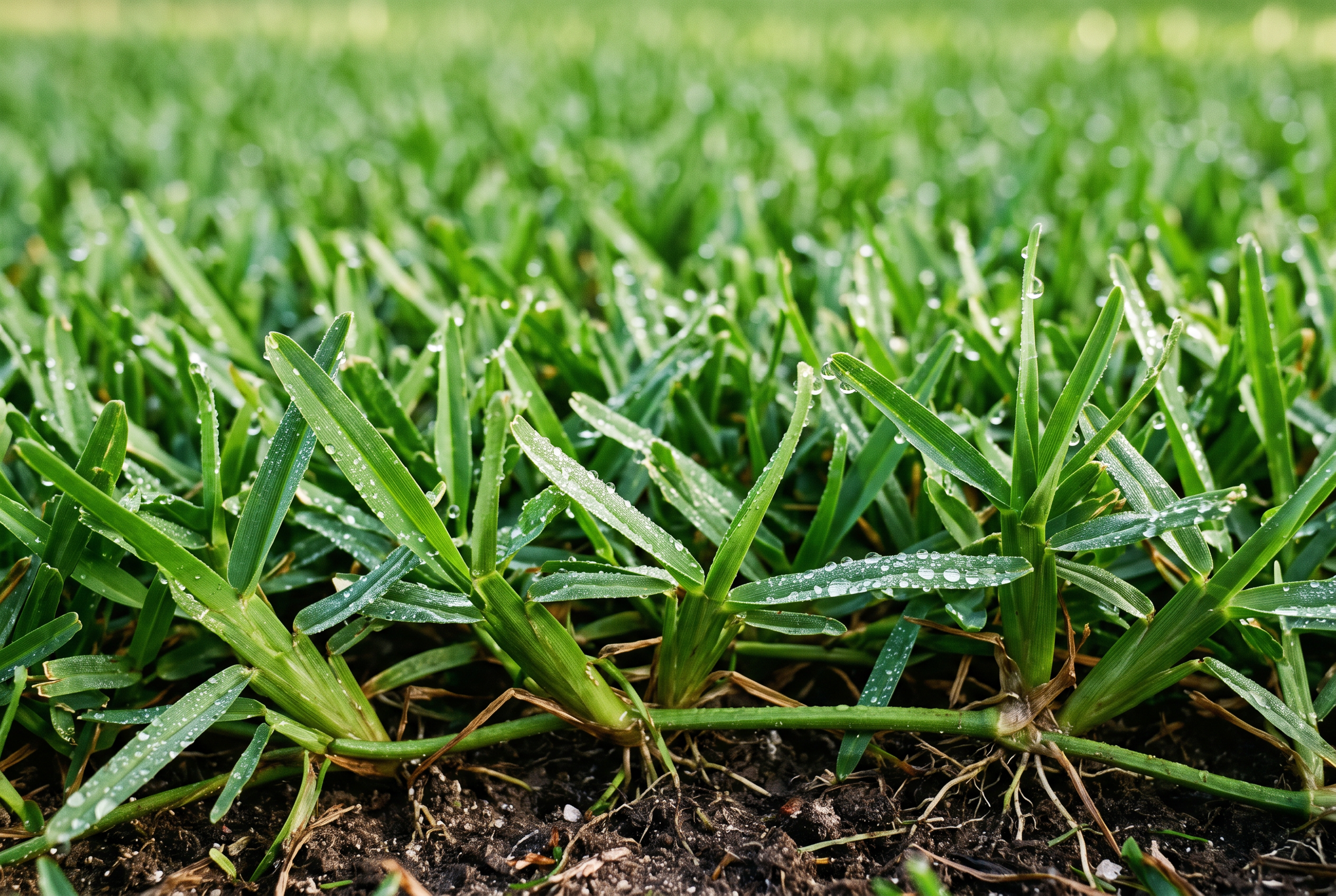
Weed Prevention After Sod Installation in Florida: Why Weeds Appear and What Is Safe to Use
Weed prevention after sod installation Florida: why weeds sprout weeks after a fresh install in Tampa Bay, and what is and isn't safe to put on new turf.
When to Fertilize New Sod in Florida: A Season-by-Season Guide for Tampa Bay
When to fertilize new sod in Florida: wait about 30 days, then feed by the season your sod went down. A Tampa Bay timeline that protects your new lawn.