
Lawn Fungal Disease in Tampa Bay: Identify, Treat & Prevent
Lawn fungal disease Tampa Bay homeowners face peaks in summer. Learn to identify the three most common pathogens and apply the right fungicide for each.
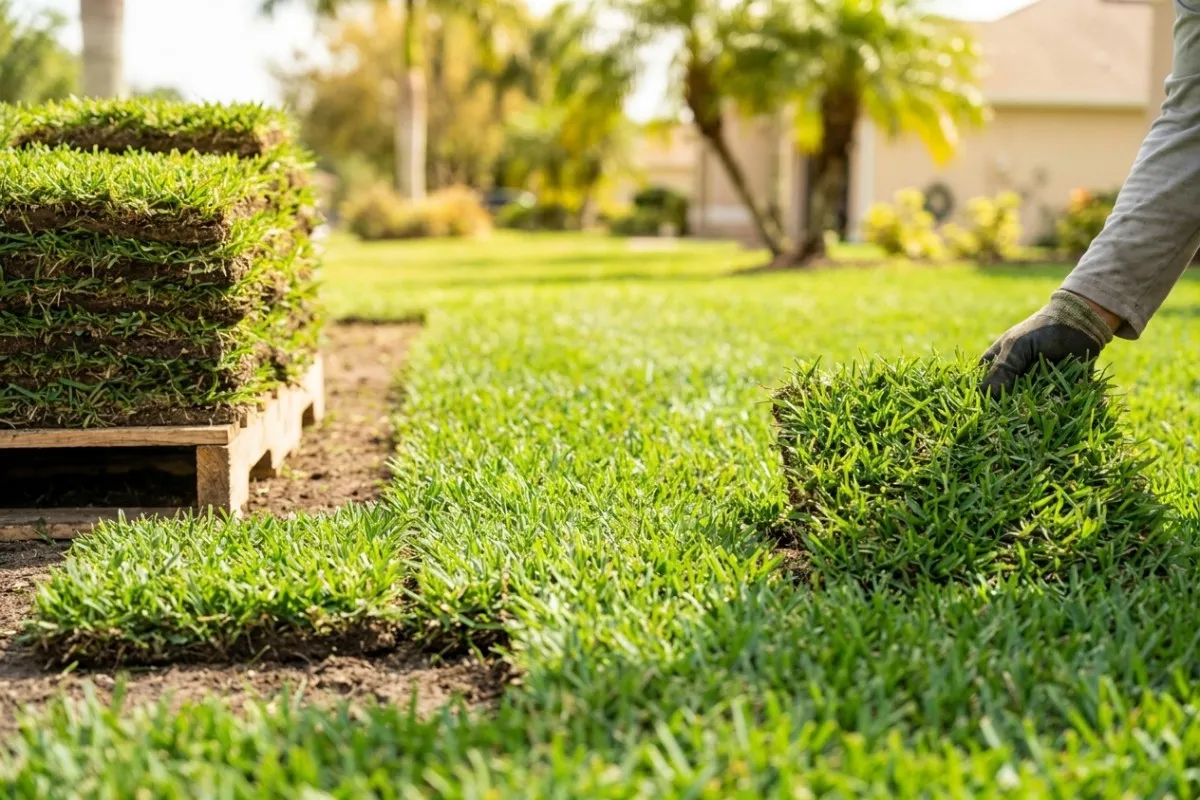
Tampa Bay’s summer weather pattern — intense midday heat, afternoon thunderstorms, and overnight humidity that never fully breaks — creates conditions that are close to ideal for turfgrass fungal pathogens. Lawn fungal disease Tampa Bay homeowners encounter isn’t a matter of bad luck or neglect; it’s a predictable consequence of a climate that sits in the pathogen’s sweet spot for much of the year.
The common mistake is treating without diagnosing. Propiconazole and azoxystrobin are both effective fungicides, but they have different modes of action and different strengths against different pathogens. In some combinations and situations, applying the wrong product can actively worsen the problem. The starting point is identifying what you are dealing with.
Why Tampa Bay Lawns Are Especially Vulnerable to Lawn Fungal Disease
Florida’s Gulf Coast averages over 50 inches of rainfall per year, with the majority falling between June and September in concentrated afternoon bursts. The water itself isn’t the primary problem — it’s what happens between rain events. Temperatures stay above 80°F through the night, humidity rarely drops below 70%, and lawns that lack adequate airflow stay wet at the blade and sheath level for hours after the storm passes.
According to UF/IFAS, St. Augustinegrass — the dominant turfgrass across Hillsborough, Manatee, and Pinellas counties — is susceptible to multiple distinct fungal diseases throughout the year. Each pathogen has its own environmental window, and matching the symptom pattern to the season is the first diagnostic step.
The Three Most Common Lawn Fungal Diseases in Tampa Bay
1. Large Patch (Rhizoctonia solani)
When it appears: September through May, most aggressively when nighttime soil temperatures drop below 70°F.
What it looks like: Circular or arc-shaped patches of dead grass ranging from a few feet to twenty or more feet in diameter. The outer margin carries a distinctive “smoke ring” of actively dying, orange-brown grass. The center of an older patch may appear relatively green as the pathogen moves outward rather than inward. At the active edge, pull a blade firmly upward — if it slides off the sheath with almost no resistance and the base is dark, soft, or smells of decay, large patch is the probable cause.
Why Tampa Bay is high-risk: The fungus Rhizoctonia solani is present in virtually every Florida lawn soil. It becomes destructive when cool temperatures combine with prolonged surface moisture, particularly overnight. Shaded areas and lawns with irrigation running in the evening accumulate the wet leaf-sheath conditions the pathogen needs to colonize.
Correct active ingredient: Propiconazole 14.3 is the standard first choice — it is a systemic triazole (DMI) fungicide that moves through the plant and disrupts sterol biosynthesis in fungal cells. It performs substantially better as a preventive, applied before nighttime temperatures fall into the disease-favorable range in late September or October. For established infections, combining propiconazole with azoxystrobin (two different modes of action) improves curative results compared to either product used alone.
2. Gray Leaf Spot (Pyricularia grisea)
When it appears: June through September, peaking in July and August during the hottest, most humid weeks.
What it looks like: Small lesions on individual grass blades that begin brown and enlarge to oval spots roughly ¼ inch long with a blue-gray center, purple-to-brown irregular margins, and a faint yellow halo. UF/IFAS Extension notes that during periods of high humidity, fungal spores give the lesion centers a distinctly velvety gray appearance. At the lawn scale, a severe outbreak looks scorched from a distance — but close inspection reveals spotted individual blades rather than uniformly dead crowns, which distinguishes it from large patch.
Why Tampa Bay is high-risk: Gray leaf spot favors daytime temperatures between 80°F and 90°F, nighttime temperatures above 65°F, and extended periods of leaf wetness. That description fits Tampa Bay from mid-June through August almost exactly. A second risk factor is soluble nitrogen fertilizer applied in summer — the rapid, lush growth it produces creates soft leaf tissue that the pathogen colonizes far more easily than mature growth.
Correct active ingredient: Heritage G Granular Fungicide (azoxystrobin 0.31%) is well-suited for gray leaf spot. Azoxystrobin is a strobilurin (QoI) fungicide that inhibits mitochondrial respiration in fungal cells and provides systemic, residual protection for up to 28 days per application. As a granular format, it requires moisture to activate — a detail that becomes relevant when timing applications around Tampa Bay’s afternoon rain cycle.
3. Dollar Spot (Clarireedia jacksonii)
When it appears: Spring and fall, most problematic when daytime temperatures are in the 70s–80s°F with heavy dew and nitrogen-deficient turf.
What it looks like: Small, bleached or straw-colored spots roughly the size of a silver dollar (2–6 inches in diameter) scattered across the lawn. Unlike large patch, dollar spot doesn’t form one large dead zone — you see dozens of distinct small circles that may eventually coalesce into larger irregular areas. The individual blade lesions have a straw-colored center band with a reddish-brown margin, a visual signature that separates dollar spot from drought stress or chinch bug damage. UF/IFAS Extension notes that the disease is strongly correlated with low soil nitrogen — very low nitrogen levels are directly conducive to dollar spot development — and with consecutive days of dew or light, infrequent irrigation rather than deep watering.
Correct active ingredient: Propiconazole 14.3 is highly effective against dollar spot and is the preferred single-active-ingredient option for this pathogen. Improving soil nitrogen levels through a balanced fertilization program is an equally important management step — the pathogen exploits turf stressed by nutrient deficiency, and fungicide alone without addressing the nutritional gap produces incomplete results. Note that azoxystrobin used as a standalone treatment for dollar spot in hot weather has been documented to further advance the disease and is not recommended for this reason — a finding stated explicitly in Mississippi State University Extension’s guidance on warm-season turfgrass dollar spot.
Propiconazole vs. Azoxystrobin: A Practical Comparison
The two active ingredients have different modes of action and, accordingly, different resistance profiles and optimal use cases:
| Pathogen | Preferred Active Ingredient | Notes |
|---|---|---|
| Large patch (R. solani) | Propiconazole + azoxystrobin | Combination outperforms either alone for curative use |
| Gray leaf spot (P. grisea) | Azoxystrobin (Heritage G) | Avoid high-N fertilizer during treatment window |
| Dollar spot (C. jacksonii) | Propiconazole | Azoxystrobin alone may advance dollar spot in heat |
Rotating active ingredients between application cycles — propiconazole one round, azoxystrobin the next — also reduces the risk of fungicide resistance, a documented concern in high-pressure turf disease programs.
Application Timing: Working Around Tampa Bay’s Afternoon Rain Cycle
Tampa Bay’s thunderstorm pattern from June through September is consistent: relatively clear mornings, cloud buildup by midday, and heavy afternoon storms typically between 2 PM and 6 PM. That cycle directly affects when and how fungicide applications should be timed.
For liquid fungicides (propiconazole 14.3): Apply in the early morning, ideally before 10 AM. The product needs adequate dry-down time to be absorbed systemically before rain arrives — per the product label, the sprayed area must be allowed to dry completely before irrigation or rainfall, which in warm morning conditions typically takes several hours. An application made at noon that is hit by 2 PM thunderstorms may experience surface runoff before the active ingredient has moved into plant tissue. Morning timing also aligns with calmer air conditions that reduce spray drift.
For granular fungicides (Heritage G): Granular azoxystrobin requires moisture to move from the granule into the root zone — per the Heritage G label, a light irrigation or heavy dew is sufficient to activate it, dispersing the granules into microscopic particles that move into plant tissue. Tampa Bay’s afternoon storm pattern can work in your favor here: apply granules in the morning and the afternoon rain activates them evenly. Avoid applying if a heavy storm (over 1 inch) is forecast within two hours, which risks washing granules off slopes or creating uneven distribution before they dissolve.
Preventive vs. curative timing: Both products perform substantially better as preventives. For large patch, a preventive application in late September — before soil temperatures consistently fall below 70°F — is more effective than an October application made after patches have appeared. For gray leaf spot in summer, an early-June application before peak disease pressure begins outperforms reactive treatment in late July when infection is already established.
Cultural Practices That Reduce Fungal Pressure
Fungicide manages existing pressure; cultural practices determine whether that pressure builds in the first place.
Irrigation schedule: Run irrigation in the early morning only — never in the evening. Overnight wet grass is one of the highest-risk conditions for both large patch and gray leaf spot. Our guide on protecting your lawn through Florida’s rainy season covers how to adjust irrigation timing and frequency once the summer thunderstorm pattern is established, and when to cut supplemental watering entirely.
Mowing height and frequency: Maintain St. Augustine at 3.5–4 inches during disease-pressure periods. Remove no more than one-third of the blade per mowing. Scalping increases crown exposure and creates wound sites that pathogens colonize more easily. Clean mower blades between properties to avoid transferring spores.
Nitrogen management in summer: Avoid fast-release, soluble nitrogen fertilizers from June through August, particularly in shaded or partially shaded areas. Rapid lush growth during gray leaf spot season produces soft tissue that is meaningfully more susceptible. Slow-release formulations are preferred for summer fertilization in Florida.
Drainage and airflow: Trim overhanging canopy to reduce prolonged shade and improve airflow across the turf surface. Areas where water pools after rain require drainage correction — fungicide applied to a site that stays saturated will not hold, and neither will replacement sod.
When Fungal Damage Requires More Than Treatment
Fungicide halts the pathogen — it does not restore tissue that is already dead. Once the active infection is stopped, sections where crowns and roots have fully died need physical replacement. Our guide on fixing bare and brown spots in a Florida lawn covers how to confirm the infection is stopped before ordering replacement sod — a step that matters more than most homeowners realize. Applying new sod into an active fungal outbreak without first treating the underlying pathogen is one of the most common and costly repair errors in Tampa Bay lawns.
Tampa Bay’s summer humidity makes some degree of fungal pressure nearly unavoidable for St. Augustine lawns. What separates a lawn that stays dense and healthy from one that cycles through recurring damage is identifying the specific pathogen, applying the matched active ingredient at the right time in the right conditions, and supporting the turf with cultural practices that reduce the moisture and stress the fungus needs to establish.

Fresh-cut sod installation, replacement, and delivery in the Tampa Bay area.
Continue reading
How to Choose and Apply a Fungicide for Florida Lawn Disease
Choosing a fungicide for Florida lawn disease means matching chemistry to pathogen, picking contact vs. systemic, and rotating FRAC groups to beat resistance.

Fire Ant Control in Florida Lawns: The Two-Step Method
Florida fire ant control works best with the UF/IFAS-recommended two-step method: broadcast bait first, treat individual mounds second — a sequence that collapses colonies rather than just displacing them.
When to Fertilize New Sod in Florida: A Season-by-Season Guide for Tampa Bay
When to fertilize new sod in Florida: wait about 30 days, then feed by the season your sod went down. A Tampa Bay timeline that protects your new lawn.