Celebration Bermudagrass in Florida: Is It Worth It?
Celebration Bermudagrass in Florida delivers fine-bladed, drought-tough turf, but only in full sun. Here's where it fits a Tampa Bay yard.
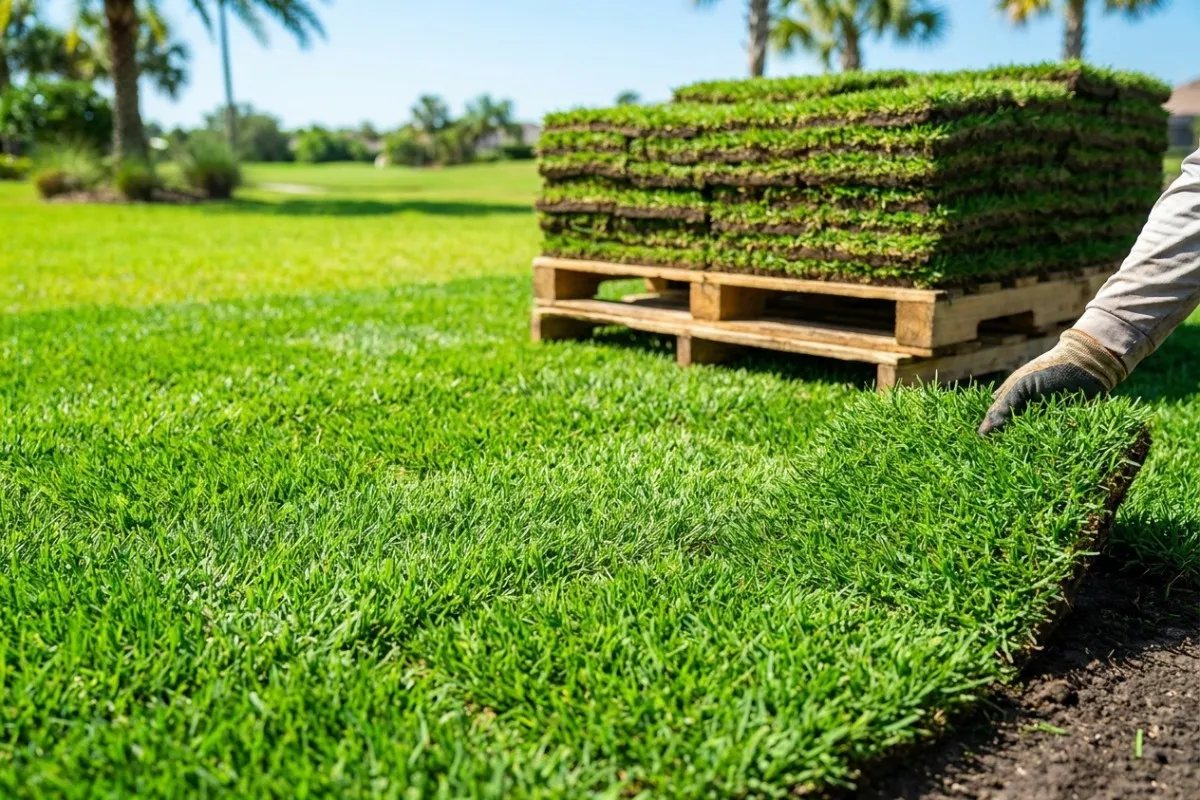
Celebration Bermudagrass in Florida is worth it for a specific kind of Tampa Bay yard: open, sun-drenched, and used hard. If your lawn gets six to eight hours of direct sun and takes real foot traffic from kids, dogs, or a backyard field, Celebration gives you a dense, fine-bladed, drought-tough turf that recovers fast from wear. If your yard is shaded by live oaks or palms, it is the wrong call, and we will tell you so before a single pallet comes off the truck. This is an honest field read on where the grass fits and where it fails.
Tampa Bay sits in USDA Hardiness Zones 9b-10a, and Celebration is a warm-season grass that grows most actively from spring through fall (UF/IFAS). Because our winters stay mild, sod roots into local soil in nearly every month of the year, so the question is never when to install Celebration but whether your site suits it.
What Celebration Bermudagrass Actually Is
Celebration is a Bermudagrass selected in Australia by turfgrass breeder Rodney “Rod” Riley — a spontaneous mutation of the ‘Greenlees Park’ variety, propagated through four generations and granted U.S. plant patent PP11,181 under the varietal name ‘Riley’s Super Sport’ (USPTO / Google Patents). It is marketed as a trademarked cultivar by Sod Solutions. You have likely seen it without knowing the name. It is used on golf course fairways, athletic fields, and high-profile landscapes because it holds a deep blue-green color, a fine blade, and a dense canopy under heavy use.
Two traits are what earn it a look for a home lawn:
- Wear tolerance and recovery. In independent traffic-tolerance research on the 2007 National Turfgrass Evaluation Program (NTEP) Bermudagrass trial, Celebration maintained the highest density under simulated traffic and rated among the best cultivars for wear tolerance, backed by an aggressive root system that knits damaged areas back together quickly (Int. Turfgrass Society Research Journal, Segars et al. 2025; NTEP 2007 trial data).
- Drought tolerance. In a two-year drought study run by the San Antonio Water System with Texas A&M AgriLife, Celebration was among the top grasses for delayed dormancy and posted a 100% recovery rate after 60 days without irrigation — data SAWS used in vetting grasses for approved-use lists (SAWS/TPT study report; Texas A&M AgriLife Today). That matters on open sites and during watering restrictions.
Those are genuine strengths documented in independent university and utility research, not marketing. The catch is that they come attached to full-sun requirements and a higher mowing commitment than most Tampa Bay homeowners expect.
Celebration Bermudagrass in Florida: How It Handles Heat, Sun, and Shade
Heat and humidity are not the problem. Celebration thrives in the hot, wet conditions that define a Central Florida summer, which is exactly the environment Bermudagrasses evolved for.
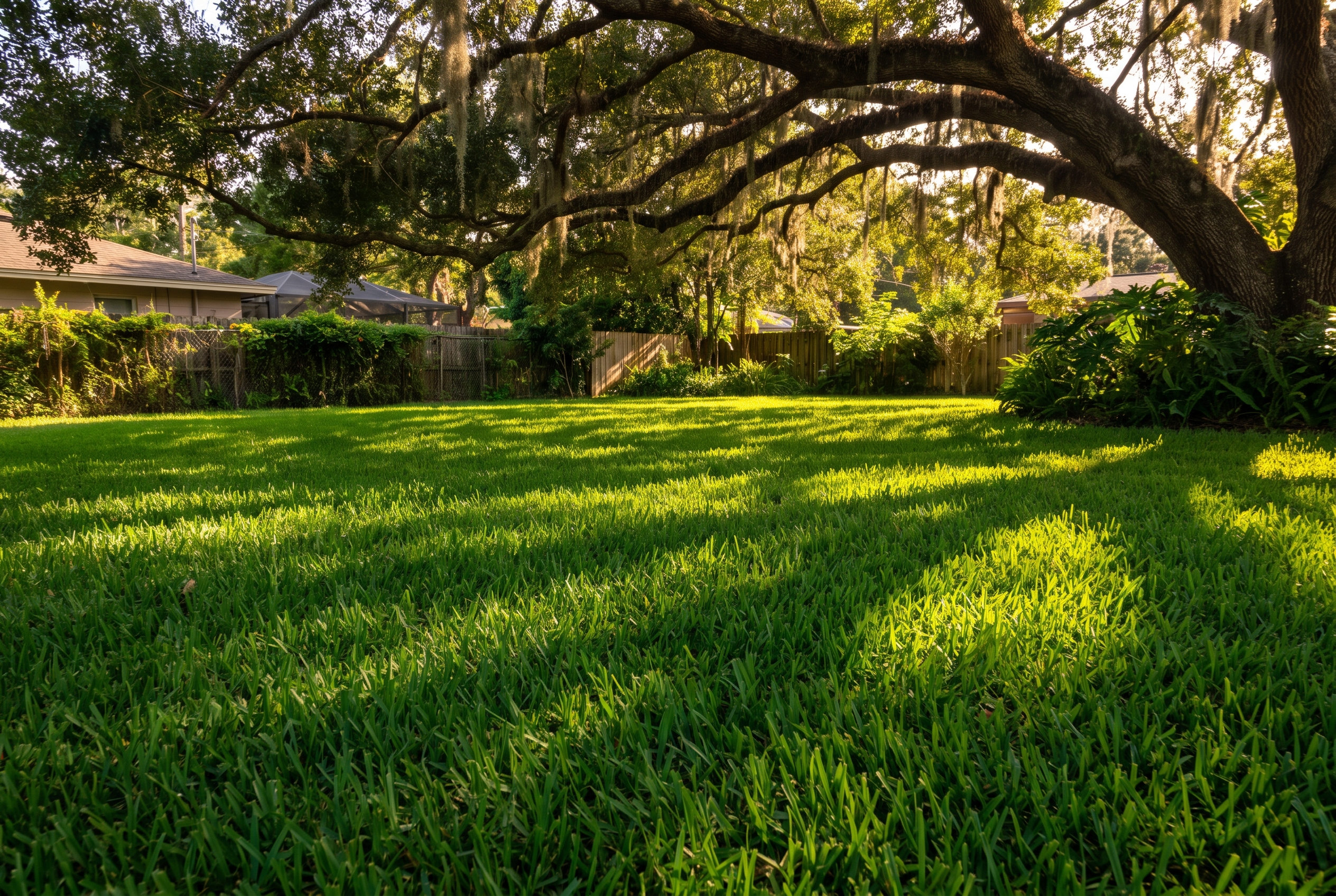
Sun is the deciding factor. Like all Bermudagrasses, Celebration is a full-sun grass. UF/IFAS notes that bermudagrasses in general have “poor cold and shade tolerance” and need roughly six to eight hours of direct sun to hold density (UF/IFAS). Celebration is the more shade-forgiving end of the Bermuda family, performing in areas that receive as little as four to five hours of direct sun, but it is still not a shade grass. Under a mature oak canopy it thins, opens up, and invites weeds.
This is the single most common reason we steer a homeowner away from it. Most residential lots in Riverview, Valrico, and Brandon carry enough oak or palm cover that a shade-tolerant St. Augustine is the safer fit. For the full cultivar breakdown on that side, see our guide on why St. Augustine leads Tampa Bay lawns.
Celebration Bermuda Grass vs St. Augustine in a Florida Yard
The honest comparison comes down to a trade-off, not a winner. St. Augustine and Celebration each dominate opposite conditions.
Shade: St. Augustine wins, decisively. Shade-selected cultivars like Palmetto and CitraBlue hold under filtered canopy where Celebration cannot.
Traffic and wear: Celebration wins. It takes a beating and recovers faster than St. Augustine, which thins in heavily walked paths and play zones.
Mowing: St. Augustine is easier to live with. It mows at 3.5 to 4 inches with a standard rotary mower. Celebration performs best cut at one to two inches, and heights above two inches leave an uneven, stemmy look (UF/IFAS). In our growing months, that height plus frequent rain means mowing more often, sometimes twice a week at peak growth.
Feeding: Celebration asks for more. UF/IFAS calls for 4 to 6 pounds of nitrogen per 1,000 square feet per year for Bermuda in Central Florida, and notes hybrid Bermudagrasses “generally require higher levels of maintenance than other Florida lawn grasses” (UF/IFAS).
For a broader side-by-side of the three grasses we install most, our Tampa Bay sod variety comparison maps sun, traffic, and maintenance the way our project managers do on a site walk.
How Celebration Roots Into Central Florida’s Sandy Soil
Bermuda’s deep, aggressive root system is one reason it handles drought and recovers from wear so well, and that root habit pairs naturally with the sandy soils under most Tampa Bay yards. Sand drains fast and Celebration’s roots chase moisture downward, which is exactly the behavior you want on an open, sun-baked lot.
That advantage only holds if the sod itself was grown on the right base. We install sand-bottom sod because sod grown on sandy soil integrates cleanly with native sand instead of layering a dense organic mat on top that traps water at the seam and slows rooting. The difference is bigger with a grass that leans on its roots as hard as Celebration does. Our breakdown of sand-bottom versus muck-bottom sod explains why the growing base changes how fast a new lawn takes hold.
The Yard Profiles Where We Recommend Celebration
Celebration is a specialist, not a default. The yards where it earns its keep share a clear profile:
- Full-sun front and back yards with six or more hours of unobstructed direct sun and little to no tree canopy.
- High-traffic family lawns where a dog run or backyard sports would shred a softer grass.
- Open, water-conscious sites where drought tolerance and a possible watering restriction favor a Bermuda over a thirstier St. Augustine.
- Homeowners who want a fine, golf-course look and are genuinely willing to mow low and often.
Where a lawn has meaningful shade, mixed exposure, or an owner who wants low mowing frequency, we point toward St. Augustine instead. Getting that match right is the whole job. A grass that thrives in your neighbor’s open front yard can fail in your shaded backyard, which is why a project manager walks the property, counts the sun hours, and asks how the lawn actually gets used before recommending anything.
Is Celebration Bermudagrass Worth It for Your Yard?
If your lot is sunny, active, and you are ready for a low, frequent mow, Celebration Bermudagrass is one of the strongest turfs you can put down in Tampa Bay, with proven drought and wear performance behind it. If it is shaded or you want less upkeep, it is not the right grass, and no amount of care will change that. The value is entirely in the match between the grass and the site.
If you would like an honest read on whether your yard suits Celebration, a project manager can walk the property, map the sun and traffic, and help you land on the variety that will actually thrive where you live. Sod cut fresh from a trusted local grower does the rest.
Continue reading
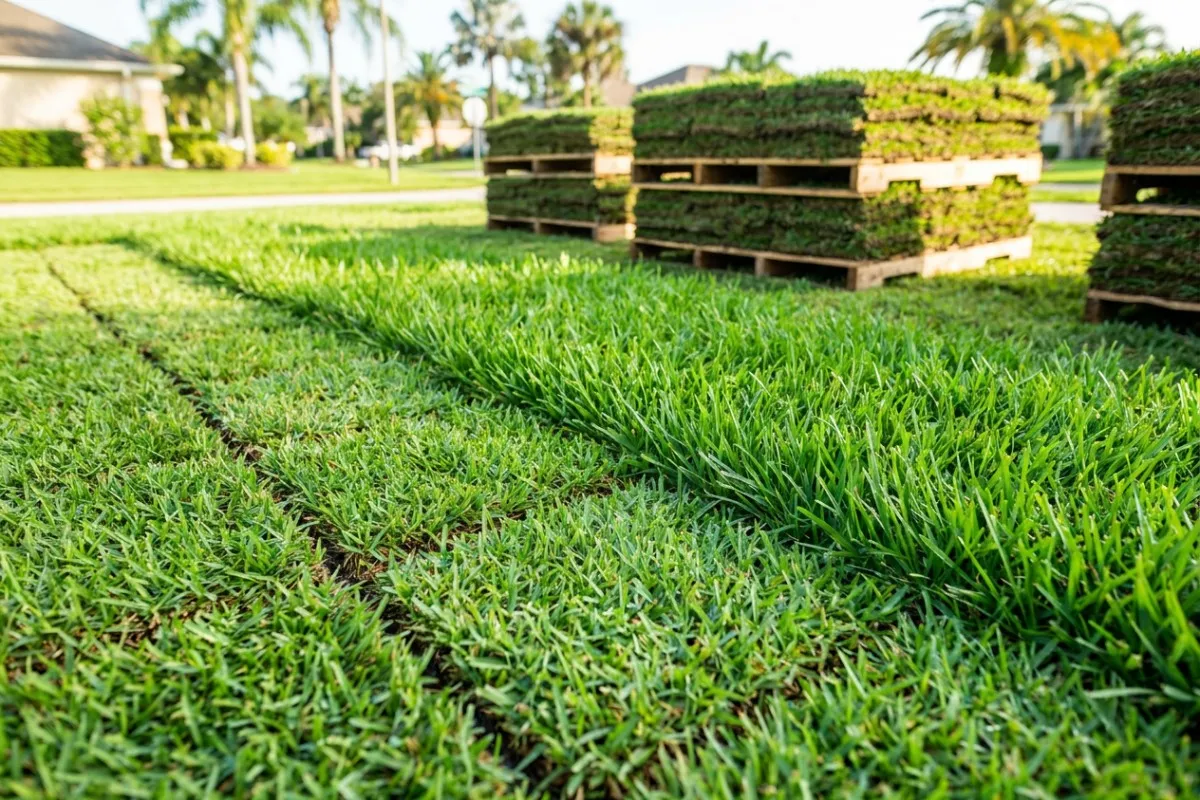
Best Sod for Tampa Bay: St. Augustine vs Zoysia vs Bermuda
The best sod variety for Tampa Bay depends on your yard's sun, traffic, and soil. Here's how St. Augustine, Bermuda, and Zoysia compare.
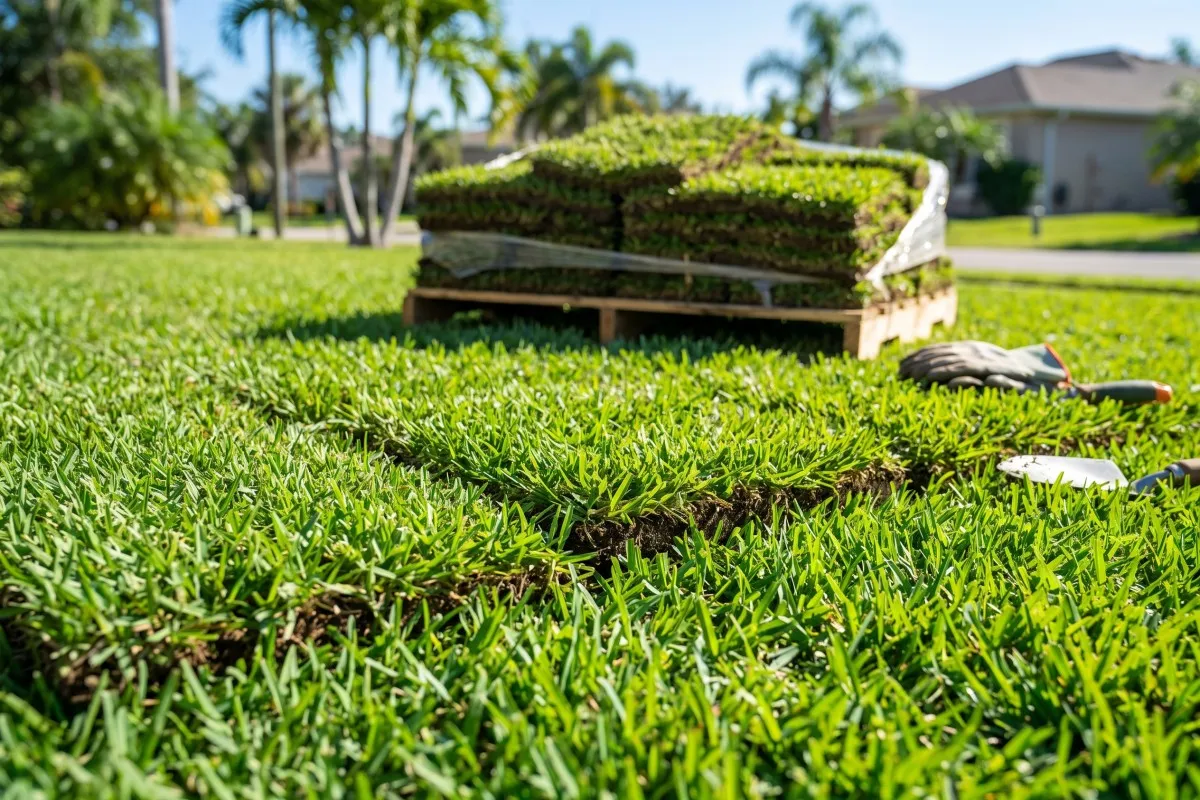
St. Augustine Grass Varieties in Tampa Bay: Floratam vs. ProVista vs. Bitter Blue vs. CitraBlue
Compare the St. Augustine grass varieties Tampa Bay lawns rely on: Floratam, ProVista, Bitter Blue and CitraBlue, and how to pick the right one.
Shade Tolerant Sod in Florida: What Survives Under Tampa Bay's Tree Canopy
Shade tolerant sod in Florida is a short list. Here is what actually holds under mature oaks and palms in Tampa Bay, and what quietly fails.