Sod vs. Grass Seed in Florida: Why Tampa Bay Homeowners Almost Always Choose Sod
The honest sod vs grass seed Florida comparison: why sandy soil, summer heat, water rules, and St. Augustine make seeding a losing bet for most yards.
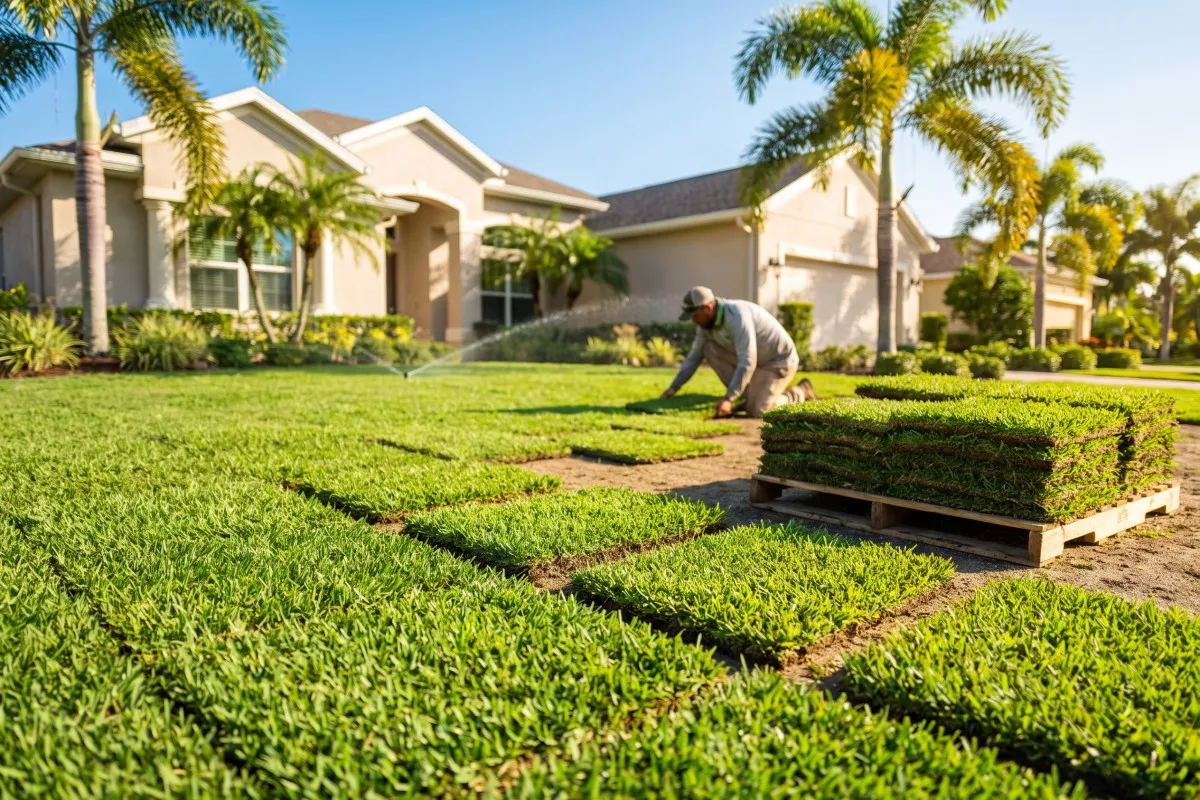
The sod vs grass seed Florida question has a shorter answer than most homeowners expect. Across the yards we walk in Riverview and Brandon, sod wins for nearly every residential lawn, and not because we happen to install it. It wins for two reasons. Florida’s most common lawn grass has no seed you can buy, and the ground here fights bare soil harder than almost anywhere in the country. If you are weighing the cheaper DIY seed route, this is the fair comparison, not a sales pitch.
We are a family-owned crew that lays sand-bottom sod day in and day out across Hillsborough and Manatee. Below is what we have learned about why seeding falls apart here, and the narrow cases where it still has a place.
Sod vs Grass Seed in Florida Starts With One Fact: No St. Augustine Seed Exists
Most Tampa Bay lawns are St. Augustinegrass. It is the most commonly used lawn grass in Florida, according to UF/IFAS, and it is established vegetatively, as sod, plugs, or sprigs, not from seed. There is no bag of St. Augustine seed on the shelf at any garden center, and there is no viable one to order online.
The reason is agronomic, not a supply gap. St. Augustine’s seed yield is so low that commercial production is not practical, and pushing for higher seed output would degrade the turf’s appearance. Sod Solutions lays this out plainly in their piece, There’s No Such Thing as St. Augustine Grass Seed. So if you want the grass that thrives in Tampa Bay’s heat, humidity, shade, and coastal salt, seed is off the table before the conversation even starts. You would be seeding a different, lesser-suited grass by default.
That single fact ends the debate for a large share of local yards. The rest of this guide is for the homeowner who says, “Fine, I’ll seed Bahia or Bermuda instead.” Here is why that usually disappoints too.
Florida’s Sandy Soil and Heat Punish Bare Ground
Seeding means weeks of exposed dirt. In Central Florida’s sandy soils, that is the problem.
Our soils drain fast and hold little moisture at the surface, which is exactly where a germinating seed lives. A seedbed that dries out at midday stalls or dies. Summer heat compounds it. Tampa Bay sits in USDA Hardiness Zones 9b–10a, with a warm-season growing window that runs roughly March through November and sod installation possible in any month of the year. That long, hot season is a gift for established turf and a punishment for bare seedbeds. Surface temperatures on open sand climb well past what tender seedlings tolerate.
Then there are the weeds. UF/IFAS is direct about it: sodding is the preferred establishment method because it delivers an instant lawn with fewer chances of weed invasion, while open, bare areas let weeds establish and grow quickly. Bare soil in a Florida summer is not a blank canvas. It is a nursery for crabgrass and every opportunistic weed already sitting in the seed bank. The UF/IFAS Weed Management Guide for Florida Lawns is a long document for a reason.
Sod skips that window entirely. Fresh-cut sod arrives as a closed canopy that shades the soil and crowds weeds out from day one. We still walk customers through early care, and our guide to weed prevention after sod installation covers what to watch.
Water Restrictions vs. What Seed Actually Needs
Here is the practical trap. Seed germination demands light, frequent watering to keep the seedbed constantly moist, often several times a day for weeks. Florida’s water rules do not allow that.
Most of the state’s water management districts limit lawn irrigation to one or two days a week, per UF/IFAS. Manatee County runs an especially tight schedule, and our breakdown of the local rules shows how tight. Miss a day and a stretch of germinating seed cooks. Sod changes the math. An established install needs deep, infrequent soaking to anchor, and that fits comfortably inside a two-day window.
The Honest Cost and Timing Math
Seed is cheaper up front. We will not pretend otherwise. On paper, professional seeding runs a fraction of sod per square foot. As of 2026, industry estimates put seeding at roughly $0.07 to $0.23 per square foot versus $1.70 to $2.60 for sod. That gap is real, and for a cost-conscious homeowner it is the whole appeal.
Timing tells the other half of the story. Sod gives you a usable lawn in about two to three weeks as it roots. A seeded lawn commonly takes two to four months to fill in, and 10 to 12 weeks before it can handle even light foot traffic. In Tampa Bay’s climate, those weeks are not passive waiting. They are weeks of irrigation you cannot legally supply and weed pressure you have to fight, with fresh erosion risk on any slope every time an afternoon storm rolls through.
Count the true cost, not just the sticker:
- Reseeding failed patches. Thin spots and washouts mean buying seed and starting over on those areas, sometimes twice in a summer.
- Weed control on bare ground. Herbicide, hand-pulling, and time you did not budget for.
- Water you cannot deliver. The frequent irrigation seed needs collides head-on with local restrictions.
- The wait itself. Two to four months of mud, dust, and a yard you cannot use.
Add those back in and the cheap option often stops looking cheap. We see the aftermath regularly: a homeowner seeds in June, fights weeds and dry spots all summer, then calls us in the fall to sod the whole thing anyway.
Where Seed Still Makes Sense
We are not here to tell you seed never works. It does, in specific situations, and pretending otherwise would be the sales pitch we promised to avoid.
Large open acreage headed for Bahia is a fair candidate. Bahiagrass grows readily from seed and tolerates poor sandy soil, and over big rural lots where appearance is secondary it is genuinely economical. If you are covering pasture-scale ground with a low-maintenance grass and can wait out an establishment season, seed earns its place. Certain Bermuda and centipede projects can pencil out too.
One thing to treat with skepticism: the premium “coated” or “guaranteed” grass seed marketed as a sure thing. Coatings can help moisture retention at the margins. No coating overrides Florida’s water restrictions or a July heat index. The germination rate still lives or dies on constant moisture you are not allowed to provide. Read those claims the way you would read a lawn warranty, as marketing that shifts the risk back onto you, not a promise of a finished lawn.
For a standard residential yard in Valrico, Riverview, Brandon or Lithia, though, the honest recommendation lands on sod almost every time.
What We Tell Every Customer
The lawns we install root faster because we lay sand-bottom sod grown on sandy soil, matched to the ground it is going onto. That matters more than most homeowners realize, and our comparison of sand-bottom versus muck-bottom sod explains why the wrong base slows everything down. If St. Augustine is your grass, our guide to why it dominates Tampa Bay lawns walks through the varieties that fit sun and shade.
Seeding is not a moral failing. It is just the wrong tool for most of the conditions we work in. Sandy soil, relentless heat, tight watering rules, and a grass with no seed all point the same direction.
If you would like a straight answer for your specific yard, we are happy to walk it with you and tell you honestly which route makes sense. Reach out for a free quote whenever you are ready.

Fresh-cut sod installation, replacement, and delivery in the Tampa Bay area.
Continue reading
When to Fertilize New Sod in Florida: A Season-by-Season Guide for Tampa Bay
When to fertilize new sod in Florida: wait about 30 days, then feed by the season your sod went down. A Tampa Bay timeline that protects your new lawn.
How Long Does Sod Last in Florida? A Tampa Bay Homeowner's Honest Guide
How long does sod last in Florida? An honest Tampa Bay answer: realistic St. Augustine lifespan, what shortens it, and how to stretch your lawn's years.
Winter Lawn Care in Tampa Bay: What Florida Homeowners Need to Do From December Through February
Winter lawn care in Tampa Bay is mostly about doing less, correctly. Here are the few critical steps that carry your sod from December through February.