
Sod Plugs vs. Sod Installation in Florida: Which Fix Is Right for Your Tampa Bay Lawn?
Sod plugs vs sod installation Florida: how we decide whether plugs can save your Tampa Bay lawn or a full re-sod is the only fix that will hold.
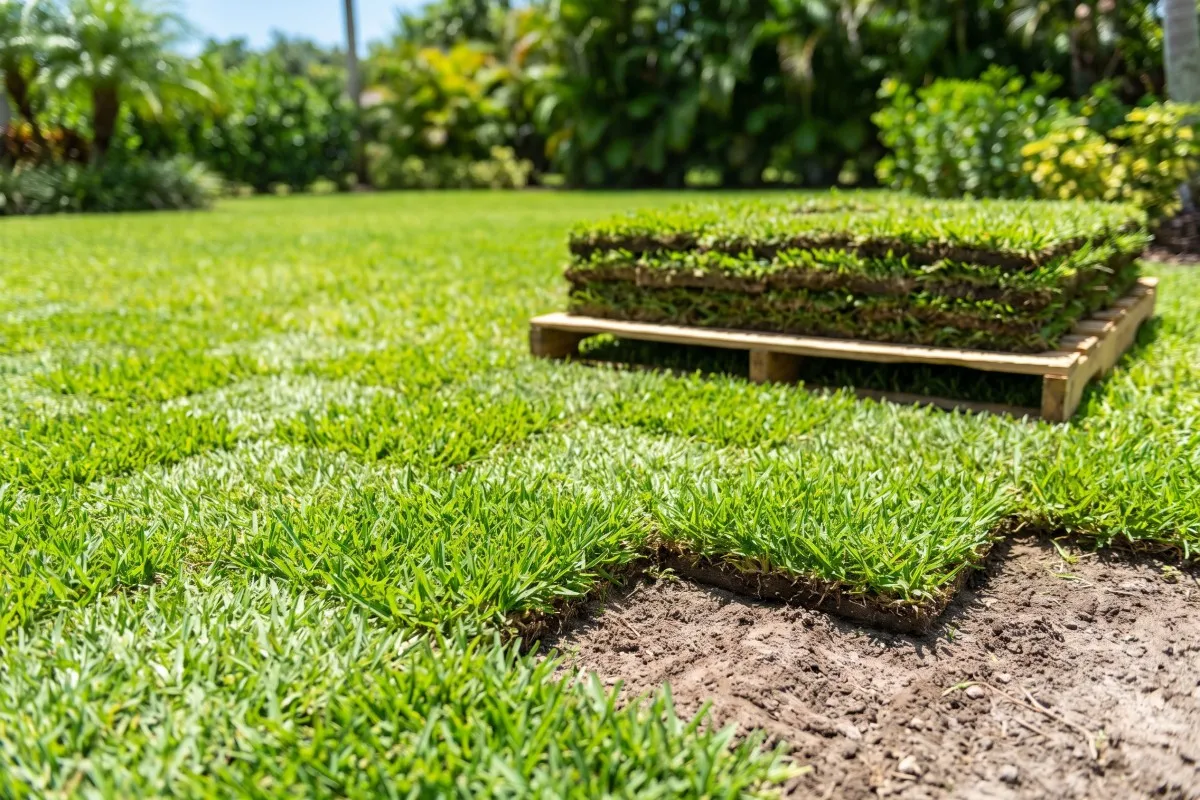
When you ask us whether sod plugs vs sod installation in Florida is the right call for a thinning yard, the honest answer is a diagnosis, not a sales pitch. Plugs make sense when the damage is small, isolated, and surrounded by living grass that can knit back over it. A full re-sod is the fix that holds when the turf is mostly gone, the roots are dead, or the same bare patches keep coming back. Below is the same logic our project managers walk through on a Riverview or Brandon driveway before we quote either one.
We install across Hillsborough, Manatee, and parts of Pinellas, which sit in USDA Hardiness Zone 9b. That matters here. Our warm-season grasses grow and spread for most of the calendar, so plugs have a real chance to fill in, and sod roots readily in any month. There is no closed season to work around in Tampa Bay.
Sod Plugs vs. Sod Installation in Florida: What Each One Actually Is
A sod plug is a small square of established grass, roots and soil intact, that you set into a hole in an existing lawn and let spread outward. Full sod installation lays solid squares of fresh-cut turf edge to edge for immediate, complete coverage.
The difference is not just size. It is time and certainty. Plugs are cheaper up front because you buy far less grass, but you are buying a head start, not a finished lawn. They rely on the grass spreading to close the gaps. Sod is the finished lawn on day one.
That distinction is everything in our grasses. St. Augustine spreads by above-ground runners called stolons and cannot be grown from seed at all, so every repair here is either sod or plugs. Zoysia spreads by both stolons and underground rhizomes, which builds a denser mat over time but establishes more slowly. Neither one closes a gap overnight.
When Plugs Are the Right Tool
Plugs earn their keep on small, defined problems in a lawn that is otherwise healthy. Sod Solutions notes grass plugs are well suited to repairing minor damage from insects, disease, or pet urine, and that matches what we see in the field. The candidates we green-light for plugs usually share a few traits:
- Isolated spots, each roughly the size of a dinner plate up to a couple of square feet
- Firm, living turf on all sides that can send runners into the gap
- A cause you have already fixed, so the spot will not simply die again
Spacing controls how fast plugs disappear into the surrounding lawn. For St. Augustine, closer spacing of roughly 6 to 12 inches fills in far faster, while wider gaps stretch the wait. Zoysia is slower by nature. UF/IFAS reports zoysia plugs are usually planted on 8- to 12-inch centers and need at least one full growing season for complete coverage. Set your expectations before you buy, not after.
Be honest with yourself about the wait. A plugged St. Augustine repair typically knits together over one to two growing seasons depending on spacing and care. In Zone 9b that clock runs most of the year, but it still runs. If you cannot look at partial coverage for months, plugs will frustrate you.
When a Full Re-Sod Is the Only Fix That Holds
Once damage crosses from a few spots into most of the yard, plugs stop being a bargain and start being a slow, patchy disappointment. Full sod is the better answer when any of these are true.
The math stops favoring plugs. As a working rule, when roughly a third or more of an area is bare, or the dead zones have merged into large contiguous patches, the cost and labor of plugging enough of them closes the gap with re-sodding, and sod gives you a finished lawn the same day. We talk this through square foot by square foot on the estimate. Most residential re-sod projects we install wrap up in a single day.
The roots are gone. Plugs need to spread across living soil. Push a screwdriver into the bare zone. If it hits hard, compacted ground and the surrounding grass pulls up with no root resistance, there is nothing for runners to colonize. Sod brings its own root mass and soil contact.
The same patches keep returning. Recurring bare spots almost never mean you need more grass. They mean an unresolved cause, chinch bugs, large patch fungus, drought, or drainage, is still working. We cover reading those signatures in our guide to fixing bare and brown spots in a Florida lawn. Fix the cause first. Then decide plugs or sod.
The Soil Signal We Check Before Either Approach
Whether we plug or re-sod, the ground underneath decides how fast the repair takes. This is where sand-bottom sod earns its place across Central Florida. Our soils here are sandy, and sod grown on sandy ground integrates cleanly with them, roots faster and deeper, and drains better through our heavy summer rain. Muck-grown sod sits on a different soil profile and knits in more slowly.
The same principle applies to plugs. A plug carrying dense muck soil into a sandy yard makes a poor seam at the root line. We explain the full reasoning in our breakdown of why sand-bottom sod outperforms muck-bottom sod here. Match the plug or the sod to the soil it is going into.
Cut freshness matters just as much. We cut sod right before installation rather than letting it sit palletized for days, because heat-stressed turf establishes poorly no matter how good the diagnosis was.
About Plug Kits and “Guaranteed” Fill-In
The plug aisle is full of confident promises. Retail bins of plugs and 1-inch auger bits that drill 72-cell trays fast genuinely speed up a DIY job, and we have no quarrel with a homeowner who wants to plug a few pet spots on a Saturday. What we push back on is the marketing that treats plugs as a guaranteed shortcut around a real diagnosis.
A plug set into an active chinch bug patch dies as fast as the grass it replaced. A “coverage guarantee” on a box cannot know whether your soil is compacted or your irrigation misses that corner. We do not offer guarantees or warranties on living grass, and we are skeptical of anyone who does, because establishment depends on watering, weather, and site conditions no seller controls after the sale. Read those claims the way you would read any promise that ignores the actual problem.
Our Quick Decision Path
Here is the shortcut we hand customers who want to reason it through themselves.
- A few small spots, living grass around them, cause already fixed: plug it, space tight, and wait a season or two.
- Large merged patches, dead roots, or repeat failures: re-sod it and start clean.
If you are also weighing whether to seed instead, we have already made that case: in Tampa Bay, sod almost always beats grass seed on sandy soil under summer heat and water restrictions. Seeding rarely enters the plugs-versus-sod conversation here for a reason.
Either way, the sequence never changes. Diagnose the cause, fix it, then choose the repair that fits the damage in front of you. If you want a second set of eyes on a patchy lawn anywhere from Valrico to Apollo Beach, we will walk it with you and tell you plainly which fix we would install, and why, before anyone talks price.

Fresh-cut sod installation, replacement, and delivery in the Tampa Bay area.
Continue reading
The Best Time to Install Sod in Florida? Why Tampa Bay Is a Year-Round Window
The best time to install sod in Florida isn't a single season. Here's how Tampa Bay's climate opens a year-round window, season by season.
Sod Warranty in Florida: Why It Won't Save Your Lawn
The truth about a sod warranty in Florida: why sod is a living product, why guarantees are often gimmicks, and what actually protects your new lawn.
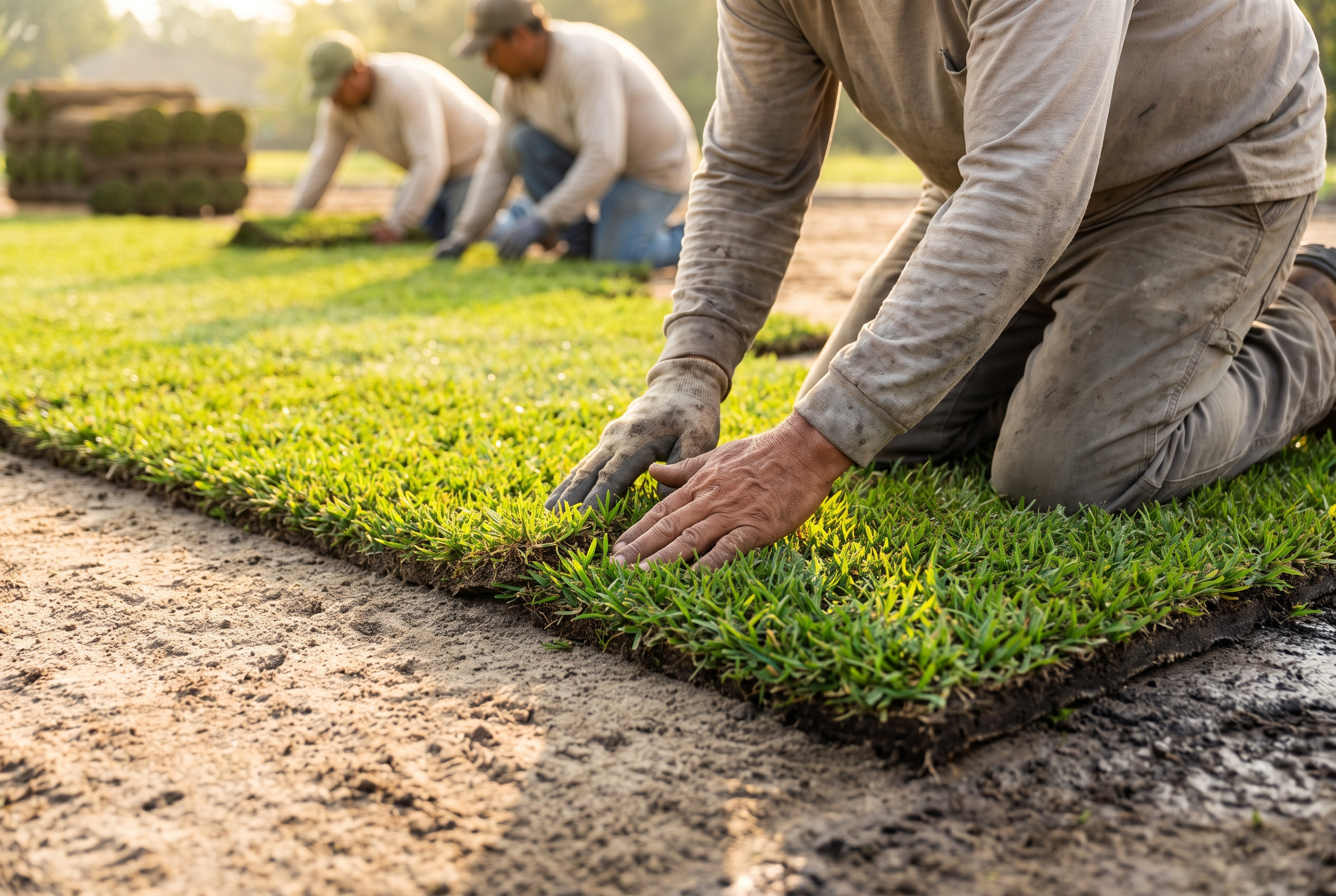
The Sod Installation Process in Florida: What Happens on Install Day in Tampa Bay
The sod installation process in Florida, behind the scenes: what our Tampa Bay crew does on install day and how to spot a job done right.