
Turf Nematodes in Florida Lawns: Diagnosis & Management
Turf nematodes in a Florida lawn are an invisible, misdiagnosed cause of brown patches that ignore water and fertilizer — how to confirm and fix it.
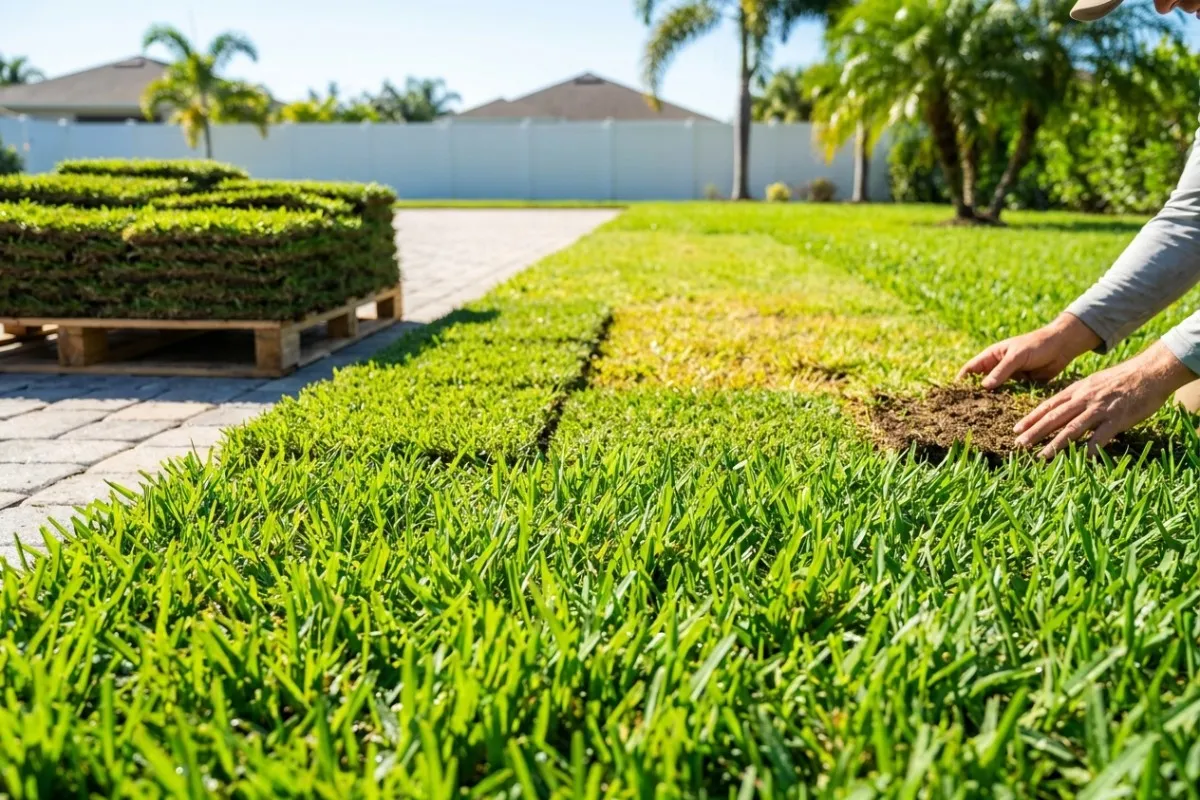
If patches of your lawn keep thinning or dying no matter how much you water or fertilize, the most overlooked culprit is living in the soil below the grass. Turf nematodes in a Florida lawn are microscopic roundworms that feed on grass roots, and they are one of the leading reasons Tampa Bay St. Augustine turf declines in irregular patches that never fully recover. You cannot see them, standard pest treatments do not touch them, and the symptoms mimic drought, disease, and chinch bugs — which is exactly why they get misdiagnosed for years.
This guide explains what these pests are, why Central Florida’s sandy soils are ideal habitat for the most damaging species, how to get a definitive diagnosis, and what actually reduces the pressure over time.
Turf Nematodes and Florida Lawn Decline: What Is Happening Underground
Plant-parasitic nematodes are tiny roundworms that live in soil and feed on plant roots. Every plant-parasitic nematode that damages turf in Florida feeds on roots, and as they feed they shorten and injure the root system, cutting the grass off from the water and nutrients it needs. The result is turf that behaves like it is chronically stressed even when your irrigation and fertilizer are correct.
The species that matter most on St. Augustinegrass — the most widely planted lawn grass in Florida, and the dominant turf across Hillsborough, Manatee, and Pinellas counties — are sting, lance, stubby-root, and root-knot nematodes, according to the UF/IFAS residential-lawn guidance in ENY-006. Among these, the sting nematode is the most destructive on sandy sites, capable of killing or severely stunting grass rather than just weakening it.
Why Sandy Central Florida Soil Is Ideal Nematode Habitat
Here is the connection most homeowners miss. The sting nematode is restricted to very sandy soils — roughly 90 percent sand or higher — and is common throughout much of Florida. That is a near-perfect description of the ground under most Tampa Bay yards.
Central Florida soils are predominantly sandy, which is normally an advantage: they drain fast and let roots run deep. But that same loose, high-sand structure is exactly what the most damaging turf nematode needs to move and reproduce. So the soil that makes this region great for growing sod also happens to be the environment where sting nematodes are most at home.
This is one reason the soil your sod is grown on matters. Sod grown on a sandy base integrates cleanly with your native ground and supports the deep, vigorous rooting that helps grass tolerate nematode feeding — the reasoning we lay out in why we choose sand-bottom sod over muck-bottom sod. A grass with a thick, deep root system can carry a nematode population that would visibly wreck a shallow-rooted lawn.
Symptoms: Why Nematode Damage Gets Misdiagnosed
Above-Ground Signs That Mimic Everything Else
Nematodes almost never announce themselves. The above-ground signs described by UF/IFAS look like ordinary lawn stress:
- Wilting under only moderate moisture stress, when nearby turf still looks fine
- Slow recovery of wilted areas even after solid rain or irrigation
- Gradual thinning and “melting out” of irregular patches over weeks and months
- Yellowing or browning that spreads as the grass loses ground
- Weeds moving in, especially spurge, which colonizes the open, thinning spots
The Below-Ground Tell
The tell is the pattern over time: areas that stay stressed and keep thinning no matter how carefully you water and feed. Below ground, nematode-damaged roots are abnormally short and stubby, or darkened and rotten-looking. If you dig a small plug at the edge of a struggling patch and the root system is stunted and sparse compared with healthy turf, nematodes move up the suspect list.
Rule Out the Usual Suspects First
Because these symptoms overlap so heavily with drought, fungal disease, and insect damage, nematodes are frequently ruled out last — if at all. Before assuming nematodes, it is worth working through the more common and more treatable causes first. Our guide to fixing bare and brown spots in a Florida lawn walks through the pull test for fungus, the float test for chinch bugs, and the screwdriver test for drought. When damaged patches survive all of those checks and still will not recover, a soil assay is the logical next step.
The Only Way to Confirm It: A Nematode Soil Assay
You cannot diagnose nematodes by eye, and neither can a lawn technician. Confirmation requires a laboratory count. The UF/IFAS Nematode Assay Laboratory processes lawn samples, and as of 2026 its published fee is $37 per sample for Florida residents (standard soil extraction; out-of-state samples cost more). How you collect the sample determines whether the result means anything:
- Sample the living edge, not the dead center. Nematodes leave dead soil behind, so pull cores from the margin where struggling grass meets healthy grass.
- Take many cores. Nematodes are unevenly distributed — numbers can be high in one spot and low a few feet away — so combine 10 to 20 soil cores from the root zone into one mixed sample.
- Keep it cool and get it there fast. Recovery is highest from hand-delivered samples, next best from next-day delivery, and lowest from regular mail. Do not let the sample bake in a hot car or sit over a weekend.
The lab returns the species present and their population levels, which is the difference between guessing and knowing. It also tells you whether nematodes are the real driver or just one factor among several.
What Actually Works: Managing Nematode Pressure
Here is the hard truth homeowners need up front: there is no simple chemical cure. Effective nematicides are essentially not available for residential lawns, so management is about growing grass vigorous enough to outpace the feeding rather than eradicating the pest. That work is cultural, and it starts at installation.
Match the Variety to the Site
Grass with a thicker, deeper root mass tolerates nematode feeding far better. Floratam is relatively tolerant of sting nematode because of its thick root structure, while finer-rooted cultivars are more vulnerable. Matching the right St. Augustine variety to your soil, sun, and traffic is a decision worth making deliberately — the trade-offs are covered in our St. Augustine sod selection guide.
Build a Deep Root System From Day One
Once established, water deeply and infrequently to push roots down, rather than shallow daily cycles that keep them near the surface where feeding does the most harm. Reasonable fertility and correct mowing height keep the canopy dense enough to shade out the spurge and other weeds that exploit thinning turf.
Prepare the Soil at Install Time
Thorough site preparation, clean removal of failed turf, and good grade for drainage give new sod the best possible start against existing soil pressure. This is exactly why a full renovation — done in a single day on most residential lots — often outperforms years of patching a lawn that keeps declining.
Tampa Bay sits in USDA Plant Hardiness Zone 9b to 10a on the 2023 map, so warm-season grasses grow nearly year-round with peak activity from spring through fall. That long growing season cuts both ways: it gives nematodes extended time to feed, and it gives healthy, well-rooted turf extended time to grow through the damage. Sting nematode symptoms tend to show up early in the growing season, so a lawn that goes into spring with a strong root system is better positioned to hold its ground. Because the grass is actively growing across all four seasons here, sod can be installed and established at any time of year — there is no window you have to wait for.
The Bottom Line for Tampa Bay Lawns
Turf nematodes are real, common in our sandy soils, and impossible to see or spray away. If patches of your lawn keep dying despite correct watering, feeding, disease control, and insect control, do not keep throwing treatments at symptoms — rule the common causes out first, then confirm with a UF/IFAS soil assay. From there, the durable fix is agronomic: the right variety, deep roots, sound soil preparation, and grass grown on a sandy base that matches the ground it lives in.
If you are weighing a renovation or just had new sod laid and want it set up to shrug off long-term soil pressure, our project managers can help you match the variety and preparation to your site. That is the kind of groundwork that decides how a Central Florida lawn holds up years down the road.

Fresh-cut sod installation, replacement, and delivery in the Tampa Bay area.
Continue reading
When to Fertilize New Sod in Florida: A Season-by-Season Guide for Tampa Bay
When to fertilize new sod in Florida: wait about 30 days, then feed by the season your sod went down. A Tampa Bay timeline that protects your new lawn.
Sandy Soil and Sod Rooting in Tampa Bay: Why Central Florida's Ground Works in Your Favor
Sod rooting in sandy soil across Tampa Bay is an advantage, not a flaw. Here is how Central Florida's ground helps new sod drain fast, root deep, and last.
How Long Does Sod Last in Florida? A Tampa Bay Homeowner's Honest Guide
How long does sod last in Florida? An honest Tampa Bay answer: realistic St. Augustine lifespan, what shortens it, and how to stretch your lawn's years.